Leave Your Message

Top Types of Irrigation Emitters for Global Buyers

Global buyers compare Irrigation Emitters by more than price. Flow rate, filtration needs, pressure range, spacing, and crop type all shape field performance. A button emitter may suit individual trees, while inline drip tubing can serve long vegetable rows. Micro-sprinklers cover a wider root zone, but wind and evaporation may affect application. Small details matter: a clogged filter or uneven slope can leave one bed wet and another dry.

Dr. Michael D. Dukes, a University of Florida irrigation specialist, offers a useful principle: “Emitter selection should match the crop, water quality, and operating conditions.” This is a practical summary, not a verified verbatim quotation. Buyers should check technical data sheets and test emitters under their actual pressure and water conditions. A product that performs well in a catalog may behave differently with sediment, mineral deposits, or fluctuating supply.

This guide reviews the main emitter types, their strengths, and their trade-offs for global purchasing decisions. It considers installation, maintenance, and how uniformity affects water delivery across a field or greenhouse. There is no universal best choice. Even a well-specified system can underperform if filtration or pressure regulation is overlooked. That deserves a closer look.
Top Types of Irrigation Emitters for Global Buyers

Irrigation Emitters: Definition, Purpose, and Operating Principles

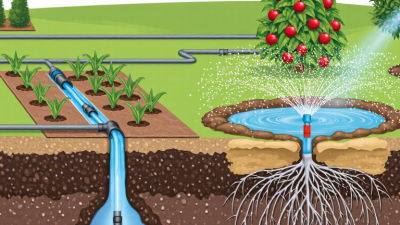
An irrigation emitter is the small outlet that releases water from a pipe near a plant’s root zone. It turns pressurized flow into controlled drops or a low, steady stream. Drip emitters are commonly used for rows of vegetables, orchards, and landscape beds. Their purpose is to deliver water close to roots while limiting wetting between plants. FAO AQUASTAT’s global water-use data attribute roughly 70 percent of freshwater withdrawals to agriculture. That makes careful water delivery more than a convenience. Tiny outlet. Real consequences.

Inside an emitter, narrow channels slow water as it passes through. Some designs deliver more water as pressure rises; pressure-compensating types use an internal diaphragm to help keep flow steadier within their specified operating range. Filter the supply, because fine particles can block those small passages. Check pressure and flow at the far end of the line, too. A clean installation can still distribute water unevenly if elevation changes or pressure is poorly managed. A neat design on paper may disappoint in a dusty field; that detail is easy to underestimate. Frequent inspection catches trouble before dry soil leaves a visible ring around a plant.
Top Types of Irrigation Emitters for Global Buyers

Irrigation emitters deliver water at controlled flow rates. The chart compares representative nominal flow rates commonly used for major emitter types.

Drip emitters generally provide the lowest flow for precise root-zone irrigation, while micro-sprinklers, spray jets, and bubblers apply water over larger areas or at higher rates. Actual output depends on pressure, nozzle size, spacing, and emitter design.

Key Factors for Comparing Emitter Types in Global Markets

Top Types of Irrigation Emitters for Global Buyers

Comparing irrigation emitters starts with the field, not the catalogue. Dripline with inline emitters suits closely spaced crops and long, regular beds. Online emitters can be placed beside individual trees, where root zones vary. Micro-sprinklers wet a wider area, but wind may carry water beyond the target.

Check flow rate and operating pressure against the crop and water supply. Pressure-compensating emitters help maintain more even output across sloping ground or long rows, within their stated pressure range. Non-compensating types may work well on flatter plots with stable pressure. Ask for test data, not just a broad performance claim. Small differences matter.

Water quality deserves equal attention. Fine passages can clog when water carries sand, algae, or mineral deposits, so compare filtration needs and cleaning access. Look closely at emitter spacing, tubing dimensions, and replacement availability in the destination market. A low purchase price can become costly if parts are hard to source. There is no perfect type. Even careful calculations can miss a stubborn pressure fluctuation or a filter that needs more frequent cleaning than expected. Test a small section under actual field conditions before choosing a system for the whole site.

Drip Emitters: Pressure-Compensating, Non-Compensating, and Adjustable Models

Drip emitters are central to efficient irrigation, but their performance depends on pressure, water quality, and crop layout. Global buyers commonly compare pressure-compensating, non-compensating, and adjustable models. Each type solves a different field problem.

Uniformity matters.

Pressure-compensating emitters maintain a relatively steady flow across changing pressure levels. They suit sloping fields, long lateral lines, and uneven elevation. A grower may receive similar output near the inlet and far downstream. This reduces dry zones and excessive runoff. However, the compensation range must match the system design. A low-quality filter can still cause clogging. Clean water is not optional.

Non-compensating emitters are often simpler and more economical. Their flow changes as pressure rises or falls, so careful pipe sizing becomes important. They can work well on short, level rows with stable pressure. Adjustable emitters allow users to alter flow for different plants or growth stages. That flexibility is useful in nurseries and mixed planting beds, though adjustment can be inconsistent between workers. I have seen a small dial change produce a surprisingly large difference. Measurement is safer than assumption.

Buyers should request flow-rate data, operating-pressure ranges, filtration requirements, and sample testing. Check actual discharge with a measuring cylinder, not only a catalog table. Temperature and water chemistry may affect results. Even experienced installers can overlook flushing access. A practical trial under local conditions often reveals more than a polished specification sheet.

Micro-Sprinklers, Bubblers, and Spray Emitters for Diverse Crops

Top Types of Irrigation Emitters for Global Buyers
Micro-Sprinklers, Bubblers, and Spray Emitters for Diverse Crops

Choosing an emitter starts with the crop and soil, not the catalogue. Micro-sprinklers spread water over a wider circle, making them useful for orchards, nurseries, and shallow-rooted crops. Their fine droplets can drift in wind or evaporate in hot, dry conditions. FAO’s 2021 report on water stress estimates that agriculture accounts for about 72% of global freshwater withdrawals, so avoidable losses matter.

Bubblers deliver a stronger flow to a small basin around each tree. They suit established orchards, but heavy clay can hold water too long, while sloping ground may carry it away. Spray emitters wet a fixed pattern along beds or crop rows. Check that the pattern reaches the root zone without soaking paths or bare soil. Small details matter.

Match emitter flow to soil intake, plant spacing, and available pressure. A pressure variation across a long lateral can leave plants unevenly watered, even with suitable emitters. Filtration and routine flushing help limit clogging, especially when water carries fine sediment. And the ideal layout on paper may not work perfectly outdoors. Test a short section, inspect wetting patterns, and adjust before installing across the whole field.

Top Types of Irrigation Emitters for Global Buyers — Micro-Sprinklers, Bubblers, and Spray Emitters for Diverse Crops

Emitter Type Typical Flow Rate Typical Operating Pressure Water Distribution Common Crop Uses Key Advantages Important Selection Considerations
Micro-sprinklers Approximately 20–150 L/h per emitter Commonly about 1.0–2.5 bar Rotating or stationary spray over a circular or partial-circle area Orchards, vineyards, nurseries, and some field or protected crops Can wet a larger area than a point-source dripper; useful for supporting root-zone moisture across a wider soil surface. Check wetted diameter, wind exposure, spacing, filtration needs, and whether the selected model is suitable for the crop and soil.
Bubblers Approximately 1–8 L/min per outlet Often about 0.5–2.0 bar, depending on design Concentrated, high-volume flow delivered to a small basin or localized root zone Fruit and nut trees, landscape trees, and other widely spaced plants Delivers substantial water to individual plants and can be used with basins or tree wells. Match flow to soil infiltration rate and basin capacity to reduce ponding, runoff, or erosion; pressure regulation may be needed.
Spray emitters (micro-sprays) Approximately 15–100 L/h per emitter Commonly about 1.0–2.5 bar Fixed-pattern spray, such as a fan, strip, or partial-circle pattern Vegetable beds, nurseries, orchards, and other crops needing localized surface coverage Offers a defined spray pattern and can distribute water over a selected area around plants. Compare spray pattern and spacing with bed layout; account for wind drift, evaporation, nozzle clogging, and filtration requirements.

Note: Flow and pressure figures are indicative ranges, not universal specifications. Actual performance varies by emitter design, nozzle, and manufacturer; consult product data and verify system pressure, filtration, water quality, and crop requirements before selection.

Material, Compatibility, Standards, and Sourcing Considerations for Buyers

Irrigation emitters differ in flow control, layout, and material, so buyers should match them to the crop and water supply. Inline emitters suit closely spaced rows, while button emitters can serve individual plants. Pressure-compensating models help maintain more even flow across sloping ground, but they may cost more and still need clean water. Adjustable emitters offer flexibility. They can also be easier to mis-set.

Material choice affects service life. Polyethylene tubing and molded plastic emitters are common, but sunlight, heat, fertilizer, and water chemistry can change how they perform. Ask for material data and check compatibility with the system’s pressure range and filtration. A small mesh filter can reduce clogging from grit, though fine particles and mineral deposits may still cause trouble. Field conditions are rarely as tidy as a test bench.

Before sourcing, compare flow rate, operating pressure, connection size, and test methods across supplier documents. Standards and certification requirements vary by destination market; request current test reports and confirm that the listed product configuration matches the shipment. Sample testing can reveal leaks, uneven discharge, or connectors that do not fit existing tubing. It takes time, but a specification sheet alone is not enough. Even careful checks cannot predict every season’s water quality.