China Best Irrigation Emitters Suppliers for Global Buyers?
Global irrigation is moving toward precision, and Irrigation Emitters sit at the center of that shift. The FAO’s State of Food and Agriculture 2021 reports that agriculture accounts for about 70% of global freshwater withdrawals. Every blocked outlet matters. Every uneven discharge can stress a crop.
Market demand is also expanding. Grand View Research estimated the global drip irrigation market at approximately USD 6.98 billion in 2023. Its report projects continued growth through 2030, driven by water scarcity, protected farming, and modern fertigation systems. Figures vary between research firms. Buyers should check definitions, dates, and regional coverage before trusting any forecast.
Dr. Daniel Hillel, a pioneer of drip irrigation, wrote, “The challenge is to produce more food with less water.” That principle makes supplier selection more practical than a simple price comparison. China’s leading manufacturers can offer pressure-compensating emitters, adjustable flow rates, anti-drain designs, and factory-scale production. Yet quality is not uniform. Not every low-cost emitter performs consistently after months of sunlight, fertilizer exposure, and hard-water deposits.
Global buyers should request test reports showing flow-rate variation, pressure ranges, filtration requirements, and material specifications. Field experience matters too. A supplier may provide an attractive sample, but the real test is a 20-hectare installation under daily pressure changes. Certifications, traceable batches, spare parts, and responsive technical support deserve equal attention. Some suppliers still present incomplete data. That is a warning, not an automatic rejection. This guide examines China’s strongest Irrigation Emitters suppliers through measurable performance, manufacturing capability, export experience, and buyer reliability.
What Are Irrigation Emitters and How Do They Work?
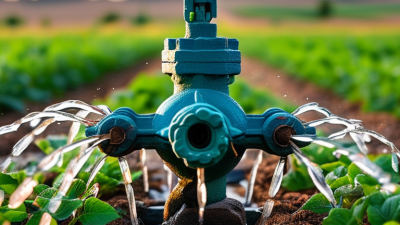
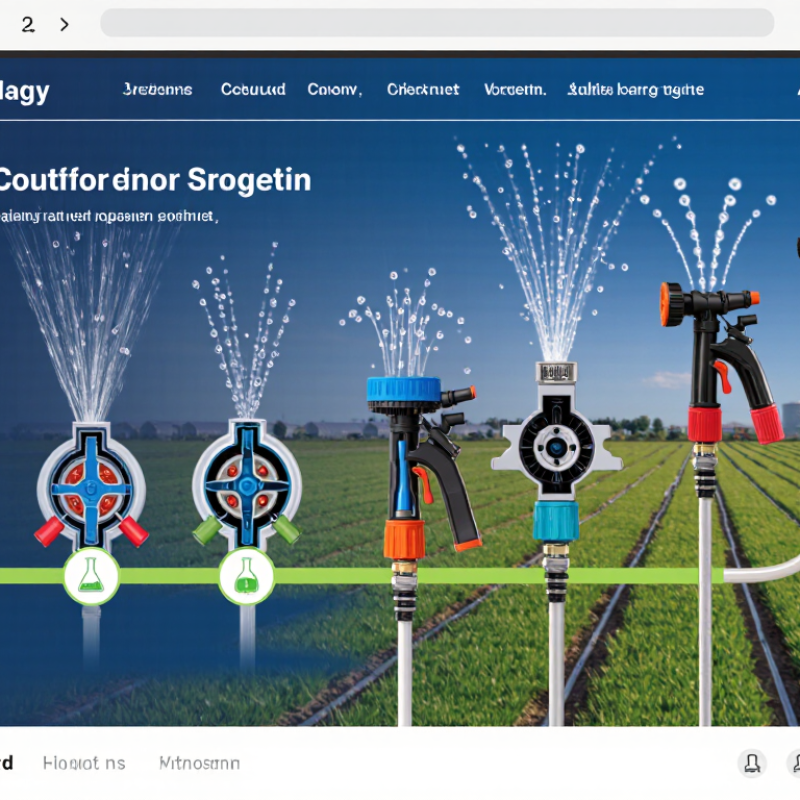
Irrigation emitters are small devices installed along dripline tubing. They release water slowly near each plant’s root zone. Inside, a narrow labyrinth channel reduces pressure and controls the flow. Some designs include pressure-compensating membranes. These help maintain similar discharge across long rows and uneven ground.
Pressure matters. A low-pressure system may produce weak, irregular streams. Excessive pressure can waste water or damage fittings. Filters are equally important because sand, algae, and mineral particles can block tiny passages. FAO AQUASTAT reports that agriculture accounts for about 70% of global freshwater withdrawals. This explains why accurate water delivery matters for farms and landscape projects.
Technical buyers should check discharge rates, working pressure, filtration requirements, and material durability. ISO 9261 provides performance requirements for agricultural irrigation emitters and emission devices. FAO irrigation guidance commonly identifies drip systems as capable of about 90–95% application efficiency under suitable conditions. Real fields are less perfect. Poor flushing, damaged tubing, or uneven pressure can reduce performance quickly. A practical test uses a measuring cup under several emitters, including the first and last units in a row. The results may reveal problems that product sheets hide. China-based suppliers can support large-volume sourcing, but buyers still need independent sampling, factory inspection, and verified test data.
How to Evaluate China’s Leading Irrigation Emitter Suppliers?
China Best Irrigation Emitters Suppliers for Global Buyers?
How to Evaluate China’s Leading Irrigation Emitter Suppliers?
A reliable supplier should provide more than attractive prices and polished product photos. Ask for factory records, production capacity, and recent quality-control data. Check whether emitters maintain stable flow at different pressures. A practical test should measure flow variation, clogging resistance, and pressure-compensation performance. Samples reveal more.
Request samples from several production batches, not only one selected unit. Use clean and slightly sedimented water during testing. Record output from emitters placed near the inlet, middle, and end of a line. Compare the results after continuous operation for at least several hours. Small differences can become serious irrigation losses across large fields.
Material verification also matters. Ask for plastic specifications, ultraviolet-resistance evidence, and operating-temperature limits. Confirm whether the supplier performs incoming-material checks and final inspections. Clear reports should include test methods, equipment details, and acceptance standards. Vague certificates deserve careful questioning.
Evaluate communication through a technical trial order. Can the supplier explain installation limits, filtration needs, and maintenance procedures? Check packaging strength, labeling accuracy, spare-part availability, and delivery consistency. A low quotation may exclude molds, testing, or replacement support. No evaluation is perfect. Even experienced buyers can overvalue a confident sales presentation, so independent testing and written commitments remain necessary.
How Can Buyers Compare Prices, Quality, and Export Services?
China Best Irrigation Emitters Suppliers for Global Buyers?
How Can Buyers Compare Prices, Quality, and Export Services?
Price comparison should begin with equal specifications, not catalog prices. Ask each supplier for emitter flow rate, pressure range, material grade, filtration needs, and minimum order quantity. A low unit price may exclude molds, testing, packaging, or freight. Calculate the landed cost per thousand pieces. In field sourcing, buyers often discover that cheap emitters create uneven wetting and higher replacement costs. That mistake is easy to make.
Quality needs practical evidence. Request production samples from the same batch, then test flow uniformity at several pressures. Check connections, wall thickness, UV resistance, and clogging performance. A simple bucket test is useful, but it is not enough for large farms. Ask for inspection records, material declarations, and consistent product drawings. Certifications can support trust, yet documents should match the actual model. Sometimes, buyers focus too much on paperwork. That deserves reflection.
Tips: Compare at least three written quotations with identical requirements. Confirm Incoterms, lead time, carton dimensions, spare parts, and after-sales response. Request photos of loading, labels, and inner packaging. A pre-shipment inspection can reveal mixed batches or damaged cartons. Clarify payment stages and complaint procedures before production. Test samples in local water conditions when possible. Small details matter. Export service is part of product quality.