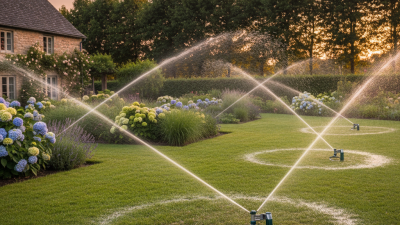
A large lawn can look evenly green from the patio and still hide dry strips near the fence. Choosing a Rotor Sprinkler for that space is not just a question of advertised reach. Pressure, nozzle selection, head spacing, wind, and soil absorption all affect coverage. The U.S. Environmental Protection Agency’s WaterSense program estimates that outdoor use accounts for about 30% of household water use nationally, with much higher shares in drier regions. It also notes that inefficient irrigation can waste water through evaporation, runoff, or overwatering. Those figures make efficient watering more than a cosmetic concern.
For a 2026 comparison, the useful question is how consistently a rotor can water a real lawn, not how far its stream travels under ideal conditions. Look for adjustable arcs, replaceable nozzles, and clear pressure guidance. Then check whether the model’s precipitation rate suits your soil and watering schedule. A long throw can help cover an open yard, but it may leave dry edges if heads are spaced poorly. Small details matter. I would also treat manufacturer coverage claims as starting points, not guarantees; yard shape and local water pressure can change the result. A simple catch-can test can reveal uneven distribution before brown patches appear. The best choice is the rotor that matches the lawn, not necessarily the one with the biggest range.
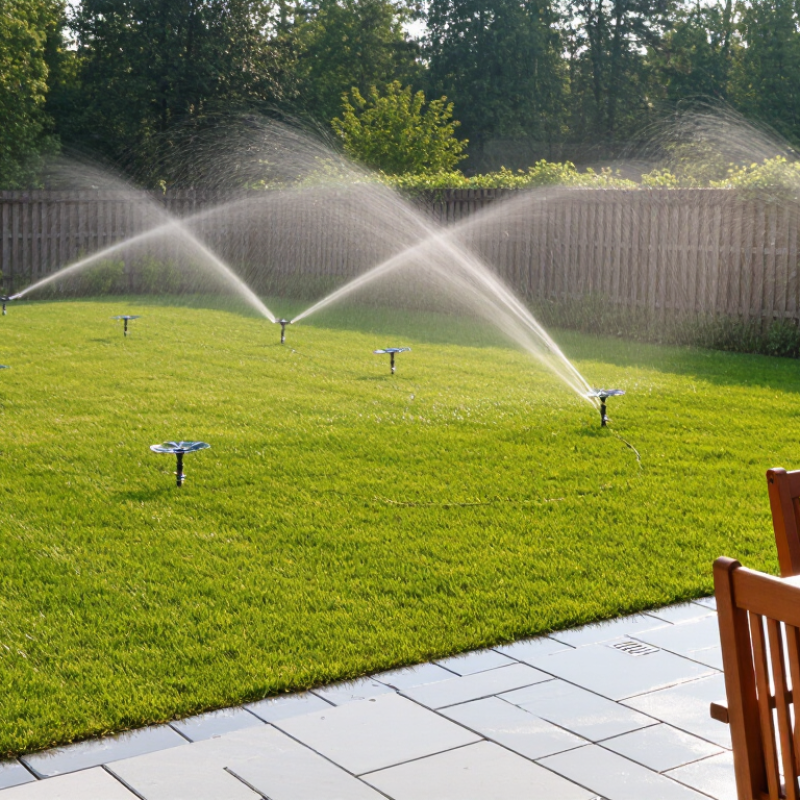
A rotor sprinkler sends a focused stream of water across a lawn while its head turns through a set arc. Many models use water pressure to drive an internal turbine or gear mechanism. The slower-moving stream can cover a broad area, but reach depends on nozzle choice and operating pressure. Too little pressure shortens the throw; too much can create mist that drifts away. On a large lawn, heads are commonly spaced so each spray reaches the next head. That overlap helps limit dry crescents near the edges. Small details matter.
EPA WaterSense guidance estimates that outdoor use accounts for about 30% of household water use in the United States, and as much as half of outdoor water can be lost to evaporation, runoff, or overwatering. A rotor layout cannot prevent every loss, especially on windy days or sloped ground. It can, however, apply water more deliberately when zones are sized and scheduled well. Check coverage with shallow catch cups placed across the grass; uneven depths reveal gaps or excess. Measure the actual run time, too. I would not assume the sprinkler’s advertised radius matches a real yard. Trees, pressure changes, and awkward corners often complicate the neat diagram. EPA WaterSense, “Watering Tips.”
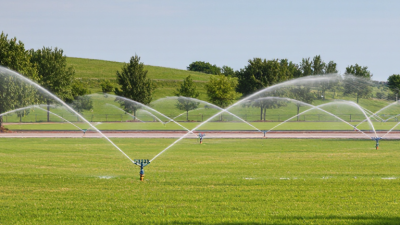
For a large lawn, compare throw radius, flow rate, operating pressure, and precipitation rate under the same test conditions. A rotor that reaches far may leave dry strips if head spacing is poor. Check whether its nozzle can be adjusted for narrow edges and curved beds. Pressure matters. Compare the manufacturer’s performance chart with your measured water pressure, not just the product’s maximum radius. The U.S. Environmental Protection Agency’s Outdoor Water Use in the United States report estimates that outdoor use accounts for nearly 9 billion gallons of water daily nationwide. That scale makes efficient coverage worth checking, especially on expansive turf.
Look for even distribution data, commonly reported as distribution uniformity or scheduling coefficient, and confirm the test pressure and nozzle used. Match the rotor’s precipitation rate to nearby sprinklers; mismatched rates can leave one zone soggy while another dries out. Check the filter requirements, serviceable parts, and stated warranty, too. A clogged nozzle is not rare. In a practical comparison, place catch cups across the zone and run each candidate for the same interval; uneven cup depths expose weak coverage quickly. I would still verify results after installation, since wind, slope, and real-world pressure can change performance.
Choosing a rotor sprinkler starts with the lawn’s shape, not its total area. A long, narrow strip needs a different layout from a broad rectangle with curved borders. The U.S. Environmental Protection Agency’s Outdoor Water Use in the United States report estimates that landscape irrigation uses nearly 9 billion gallons of water daily. That makes accurate coverage more than a convenience. Measure the lawn’s longest span, narrowest point, and obstacles before comparing sprinkler radius. A large throw may look efficient, but wind can push water onto paving.
For a rectangular lawn, place rotors so neighboring spray patterns overlap; the Irrigation Association’s landscape irrigation guidance recommends head-to-head coverage for more even distribution. For curved edges or separated patches, adjustable arcs can reduce overspray. Keep similar rotor types and precipitation rates together in each zone, as mismatches can leave some areas soggy while others stay pale. Check the actual spray on a breezy day. A paper layout can miss a tree’s shadow or a narrow dry corner. That’s worth revisiting. Test coverage with shallow containers placed across the lawn, then adjust spacing and run time before adding more heads.
How to read this chart: The bars show theoretical circular area, calculated as π × radius², for illustrative throw radii. They are geometric comparisons, not guaranteed watering areas. For even coverage, plan rotor spacing so each head reaches the next, and account for lawn shape, water pressure, wind, and obstacles.
2026 Best Rotor Sprinkler for Large Lawns?
Planning Coverage, Water Pressure, and Spacing
Choosing a rotor sprinkler for a large lawn starts with measuring the area, not judging spray distance by eye. Sketch the lawn, mark slopes and narrow strips, then note each sprinkler’s rated radius and pressure range. Actual coverage changes with water pressure, nozzle choice, and wind. A long-looking stream can still leave dry patches. Measure your usable pressure while water is flowing; a static reading alone may mislead.
Spacing matters just as much. For even coverage, arrange heads so each spray reaches the neighboring head, rather than stopping just short. This head-to-head layout helps compensate for weaker coverage near a rotor’s edge. Large lawns may need separate watering zones if several sprinklers running together reduce pressure. Test one zone at a time. Small adjustments can prevent both puddles and missed strips, though oddly shaped lawns may still need a little trial and error.
Tips: Set out catch cups across the lawn and run the system for a fixed time. Compare the water collected in each cup. Check again on a breezy day, and adjust spacing or run times where needed. Don’t assume one test tells the whole story.
| Planning factor | Typical planning guide | How to apply it |
|---|---|---|
| Rotor spray radius | About 20–50 ft, depending on nozzle, pressure, and rotor design | Use the manufacturer’s performance chart for the chosen nozzle and measured operating pressure; do not plan from the maximum radius alone. |
| Operating pressure | Many residential rotors are designed to operate within roughly 30–70 psi; the specified range varies by model. | Check dynamic pressure while water is flowing. Excessive pressure can create misting; insufficient pressure can reduce radius and rotation performance. |
| Head-to-head spacing | In calm conditions, start with spacing close to the selected rotor’s effective radius. | Arrange spray from each head to reach neighboring heads. Reduce spacing where wind, slopes, or irregular boundaries make distribution less uniform. |
| Illustrative spacing example | A rotor with an effective 30 ft radius may suit a layout with approximately 30 ft between heads. | Treat this as a starting point only. Confirm the actual radius at site pressure and adjust the layout to avoid dry gaps. |
| Nozzle flow | Rotor nozzle flow varies widely; residential options may range from under 1 to several gallons per minute per head. | Use the flow listed for the exact nozzle and pressure. Add the flows of all heads assigned to a zone before selecting zone size. |
| Zone capacity | Total zone demand must not exceed the water source’s available flow at adequate dynamic pressure. | Measure available flow and pressure under operating conditions. Divide a large lawn into additional zones if the combined demand is too high. |
| Matched precipitation | Use nozzles with compatible precipitation rates within the same zone. | Avoid mixing rotors and spray heads in one zone unless their precipitation rates and run-time requirements are intentionally matched. |
| Wind and site conditions | Wind, slopes, trees, buildings, and changing lawn shapes affect usable coverage. | Map obstacles and boundaries before placing heads. Use shorter spacing or separate zones where exposure or elevation changes significantly. |
| Large-lawn layout | A grid or staggered layout can work for open areas; perimeter heads should generally spray inward. | Place heads to provide overlapping coverage, then split the layout into zones based on flow, pressure, sun exposure, and soil conditions. |
2026 Best Rotor Sprinkler for Large Lawns?
Installing, Adjusting, and Maintaining Your Sprinkler System
A rotor system works best when its layout matches the lawn, not just the sprinkler’s advertised reach. Space heads so each spray reaches the next head; this helps prevent dry crescents between watering zones. Install each rotor upright, with its top level with the soil, and keep grass clear of the moving head. Check the system before burying lines. Small alignment errors are surprisingly easy to miss. The Irrigation Association’s landscape irrigation best-management guidance emphasizes proper design, installation, and ongoing system checks.
After installation, run each zone and place straight-sided cans across the lawn. Compare the collected water to spot uneven coverage, then adjust each rotor’s arc and radius. EPA WaterSense reports that outdoor irrigation uses nearly 9 billion gallons of water daily in the United States, and up to 50% may be lost through evaporation, runoff, or inefficient systems. Water early, and shorten cycles on slopes so water can soak in. Inspect monthly for clogged nozzles, leaks, tilted heads, and worn seals. I’d still recheck coverage after mowing or seasonal changes; a tidy spray pattern can hide a thirsty patch.