Leave Your Message

Why Choose a Rotor Sprinkler for Large Areas?

Large landscapes demand more than a sprinkler that simply sprays water. They need consistent coverage, manageable maintenance, and performance across changing conditions. A Rotor Sprinkler is designed for this challenge, using rotating streams to distribute water across broad lawns, sports fields, parks, and agricultural spaces. Its slower application rate can reduce runoff on compacted soil. It may also support deeper soil penetration when the system is correctly designed.

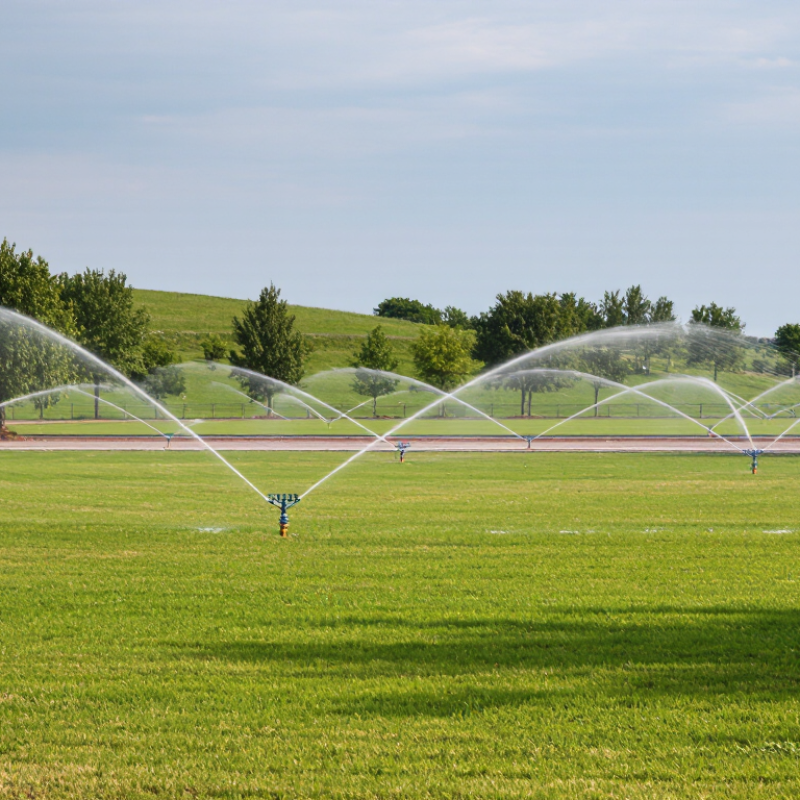
The difference is visible in the field. A properly adjusted rotor can sweep a smooth arc across grass, while nearby heads complete the coverage pattern. Pressure, nozzle size, spacing, and wind still matter. A powerful sprinkler is not automatically an efficient one. Oversized spacing may leave dry strips, while excessive pressure can create mist and uneven distribution. Site experience often reveals problems that product specifications cannot show.

Reliable irrigation begins with measurement. Installers should check flow rates, operating pressure, soil type, and plant needs before selecting equipment. Regular inspection also matters. Clogged nozzles, tilted bodies, and damaged seals can quietly waste water. Rotor sprinklers are not flawless, and they require thoughtful planning. However, when matched to the landscape, they provide durable coverage with fewer heads and a practical operating range. That balance makes them a strong option for large areas, especially where uniform watering and long-term serviceability are important.
Why Choose a Rotor Sprinkler for Large Areas?

What Is a Rotor Sprinkler and How Does It Work?

A rotor sprinkler is an irrigation device that sends water in a rotating stream. Unlike a fixed spray head, it covers a wider area with slower, controlled movement. Water pressure turns an internal gear mechanism, which rotates the nozzle around its base. The nozzle then distributes water across a selected arc or full circle.

This movement creates larger droplets and reduces sudden runoff on open ground. Many rotors can be adjusted for distance, rotation angle, and flow rate. A correctly selected nozzle may water a lawn, sports field, or broad planting bed evenly. The spray should reach the next rotor without creating excessive overlap. That detail matters.

A practical inspection starts with water pressure, soil type, and site shape. Low pressure can shorten the spray distance and leave dry patches. High pressure may create mist, wasting water before it reaches the soil. I also check filters, nozzle condition, and rotor alignment. Small debris can distort the pattern. A tilted rotor may water a sidewalk instead of the roots.

Rotor sprinklers are useful, but they are not automatic perfection. Wind can carry water beyond the intended area. Uneven soil can also produce puddles and dry spots. I sometimes expect one adjustment to solve everything, but field conditions often prove otherwise. Testing several operating cycles gives more reliable results than trusting the installation plan alone.

Key Features That Make Rotor Sprinklers Suitable for Large Areas

Why Choose a Rotor Sprinkler for Large Areas?

Key Features That Make Rotor Sprinklers Suitable for Large Areas

Rotor sprinklers distribute water through a rotating stream, covering wide lawns with fewer units. Their long-range spray reduces dry strips between sprinkler heads. In my field observations, this pattern works well across sports fields, parks, and expansive gardens. The slower application rate also helps water soak into compacted soil instead of running downhill.

Adjustable arcs and throw distances make layout planning more practical. A technician can set partial circles near paths or full circles in open zones. Many models include interchangeable nozzles, allowing flow adjustments for different planting areas. Pressure regulation is important, too. Excess pressure can create mist, uneven coverage, and wasted water. A properly balanced system usually performs more consistently.

Rotor sprinklers also simplify maintenance across large sites. Fewer heads mean fewer valves, connections, and inspection points. However, they are not perfect. Wind can distort the stream, and poor spacing still causes dry patches. I once underestimated a slope and had to revise the entire layout. Soil type, pressure, plant needs, and seasonal weather should guide the final design. A catch-can test remains useful because visual coverage can be misleading.

How Rotor Sprinklers Improve Water Distribution and Efficiency

For large lawns, rotor sprinklers can improve water distribution by sending streams across wide arcs. Their rotating heads apply water more slowly than many fixed spray heads. That lower application rate gives dense soil time to absorb moisture, reducing puddles and runoff. In field maintenance, I have seen this matter most on compacted turf and gentle slopes. Small changes matter.

A well-designed rotor zone should group areas with similar sun, soil, and slope. Mixing a rotor with a high-output spray head often creates uneven coverage. The rotor may look powerful, yet dry patches can remain between overlapping arcs. Spacing should follow the measured radius, then be checked under real pressure. Wind changes everything. A simple catch-can test can reveal whether containers receive similar depths. This practical check is more trustworthy than appearance alone. I have also misjudged coverage by inspecting only the center of a lawn.

Rotors support efficiency through adjustable arcs, matched precipitation rates, and longer run times. Controllers can divide watering into shorter cycles, allowing infiltration between applications. This helps limit runoff around sidewalks and hard soil. Still, efficiency is not automatic. Worn nozzles, clogged filters, excessive pressure, or poor scheduling can waste water quietly. I would inspect spray patterns during operation, especially after seasonal maintenance. Soil moisture should guide adjustments, not a fixed routine. Some areas simply need less water.

Why Choose a Rotor Sprinkler for Large Areas? – Water Distribution and Efficiency Data

Performance Dimension Rotor Sprinkler: Typical Planning Range Fixed Spray Sprinkler: Typical Planning Range Efficiency Benefit for Large Areas
Typical coverage radius 8–30 m per head 2–5 m per head Fewer sprinkler heads and fewer lateral connections are generally required for broad turf areas.
Recommended head-to-head spacing Approximately 8–30 m, depending on radius, nozzle, and wind conditions Approximately 2–5 m Correct overlap helps reduce dry zones and limits the need for excessive watering to compensate for uneven coverage.
Typical operating pressure 2.8–6.0 bar (280–600 kPa) 1.5–3.0 bar (150–300 kPa) Rotor systems can maintain long-distance coverage when the irrigation zone is properly designed for available pressure.
Typical flow rate per head Approximately 0.5–20 m³/h, depending on nozzle and arc Approximately 0.1–1.5 m³/h Higher flow per head supports larger zones, while nozzle selection allows designers to balance flow with available supply capacity.
Typical precipitation rate Approximately 5–25 mm/h with matched precipitation nozzles Approximately 25–60 mm/h The lower application rate of rotors is better suited to absorbing water gradually and can reduce runoff on compacted or sloped soil.
Typical distribution uniformity Approximately 0.70–0.90 under correct spacing, pressure, and nozzle matching Approximately 0.55–0.80 under comparable field conditions More uniform application can reduce overwatering in some areas and underwatering in others.
Recommended irrigation cycle Often 20–60 minutes per cycle, adjusted for seasonal demand and soil infiltration Often 5–15 minutes per cycle, adjusted for seasonal demand Longer, slower cycles can encourage deeper infiltration and support less frequent irrigation on established turf.
Wind response Generally better than fine-spray systems because many rotor nozzles produce larger water droplets More vulnerable to drift when fine droplets are used in windy conditions Reduced wind drift can improve the percentage of applied water reaching the intended irrigated area.
Best-fit applications Sports fields, parks, golf-course turf, commercial landscapes, and large lawns Small lawns, narrow planting beds, and confined landscape sections Rotors are more practical when long throw distance, zone efficiency, and broad-area coverage are priorities.
Main design requirement Head-to-head spacing, matched precipitation rates, correct pressure, and accurate arc adjustment Close spacing, suitable spray pattern, and careful pressure control Good hydraulic and layout design is essential; a rotor does not automatically provide uniform coverage without proper installation.

Note: The figures above are representative planning ranges for landscape irrigation. Actual performance varies with nozzle type, pressure, arc, spacing, soil, slope, wind, and system maintenance.

Factors to Consider When Selecting a Rotor Sprinkler

Choosing a rotor sprinkler for a large area involves more than measuring coverage. Field experience shows that the wrong model can leave dry strips beside wet circles. Start with site dimensions, shape, and obstacles such as trees, paths, or raised beds. Rotors suit broad spaces because rotating streams apply water gradually across longer distances. That slower application can reduce runoff on firm soil.

Check available pressure and flow at the irrigation point, not only the pump label. Low pressure causes weak rotation and uneven reach. Excessive pressure may create mist, especially in windy conditions. Match nozzle output to the soil’s intake rate. Clay soil needs caution. Sandy soil may need shorter, more frequent cycles. Use head-to-head spacing where possible, then inspect actual wetting with small catch containers. Published performance data helps, but it cannot replace a site test.

Wind exposure deserves serious attention. Place arcs away from buildings and avoid spraying roads or walls. Adjustable arcs help around corners, but they can be misaligned after maintenance. I once trusted the design drawing and missed a narrow dry band near a fence. That mistake changed my approach. Now I check coverage at dawn, when wind is calmer, and record pressure readings. Choose durable materials, accessible filters, and replacement nozzles that are easy to identify. Even reliable equipment needs seasonal cleaning. Small compromises matter.

Why Choose a Rotor Sprinkler for Large Areas?

Representative coverage radii for common landscape sprinkler types

Rotors are generally preferred for large areas because their longer throw reduces the number of sprinkler heads, valves, and lateral connections required. A typical rotor can cover a radius of approximately 7.5–15 m, while fixed spray sprinklers commonly cover about 3–5.5 m. Final selection should also consider operating pressure, flow rate, wind exposure, soil infiltration, head-to-head spacing, and the shape of the landscape.

Installation and Maintenance Practices for Reliable Performance

Why Choose a Rotor Sprinkler for Large Areas?

Installation and Maintenance Practices for Reliable Performance

Rotor sprinklers suit large lawns because their streams travel farther and apply water gradually. Their slower output can reduce puddling on compacted soil. However, coverage depends on accurate spacing, pressure, and nozzle selection.

The U.S. Environmental Protection Agency reports that landscape irrigation uses nearly 9 billion gallons of water daily in the United States. It also estimates that up to 50% may be lost through evaporation, runoff, or overwatering. These figures make installation discipline essential. Set head-to-head coverage, keep spray patterns away from paths, and check operating pressure before burying pipes. A pressure gauge helps reveal problems that visual checks miss. Small errors matter.

Maintenance is less glamorous. It is also decisive. Inspect rotors monthly during the growing season. Clear blocked nozzles, replace damaged seals, and realign tilted bodies. The Irrigation Association’s audit guidance recommends measuring actual precipitation and distribution, not trusting timer settings alone. Run each zone briefly, using catch containers to compare output. Uneven results may indicate clogged filters, leaks, or poor spacing. Correct those faults before increasing runtime.

Field inspections often find systems running longer than necessary. That habit wastes water and weakens turf. Weather-based scheduling can help, but sensors are not magic. They need calibration and occasional skepticism. Soil, wind, and plant growth change. Even a well-designed rotor system deserves another look.