Best Irrigation Valve Options for Global Buyers to Consider?
Irrigation valves play a crucial role in optimizing water management for agricultural practices. Selecting the right irrigation valve can significantly impact efficiency and sustainability. Global buyers are often faced with numerous options, each with unique features.
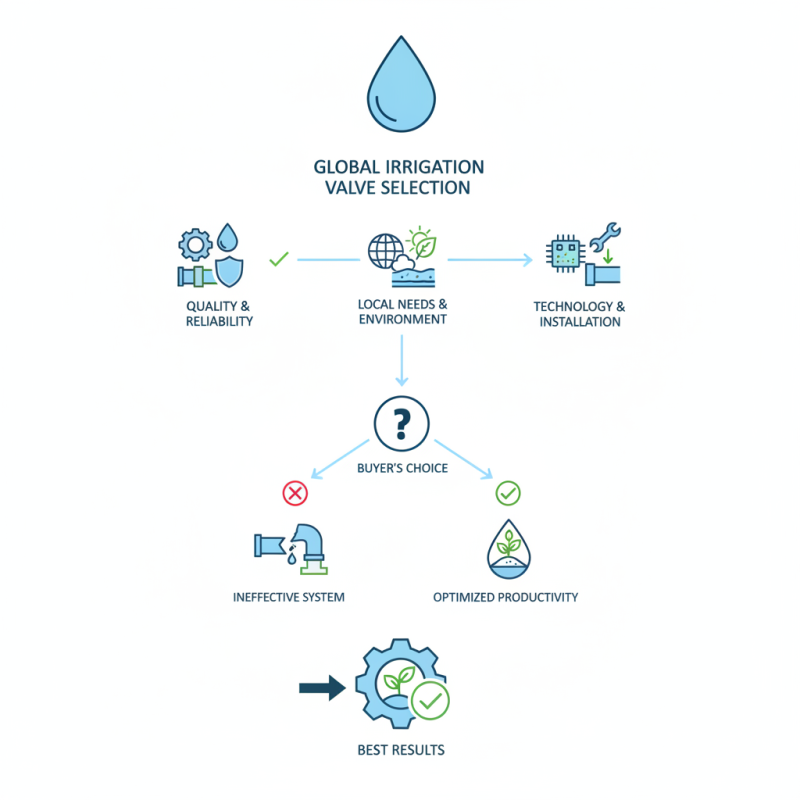
Quality and reliability are essential factors when choosing an irrigation valve. Durable materials and design contribute to longevity and performance. However, understanding local water needs and environmental conditions is equally important. Some may overlook these aspects, leading to ineffective solutions.
Navigating through various brands and technologies can be overwhelming. Buyers must consider factors like installation and maintenance. Making an informed choice is vital for enhancing productivity. An irrigation valve can either make or break your irrigation system. Therefore, careful evaluation is necessary to achieve the best results.
Top Types of Irrigation Valves for Different Agricultural Needs
When it comes to irrigation, the right valve selection is crucial. Different agricultural needs require specific types of valves. One common choice is the globe valve. It offers precise flow control. However, it may not perform as well in high-pressure situations.
Another option is the ball valve. This type is durable and highly efficient for shutting off flow. Farmers appreciate its quick operation. Yet, ball valves can struggle with sediment buildup, which may lead to maintenance issues.
Lastly, solenoid valves are essential for automated systems. They ensure timely irrigation based on programmed schedules. However, these valves can fail due to electrical issues. Choosing the right valve is not just about efficiency; it's a blend of understanding needs and anticipating potential issues. A mindful approach can enhance soil health and water usage.
Factors to Consider When Choosing an Irrigation Valve
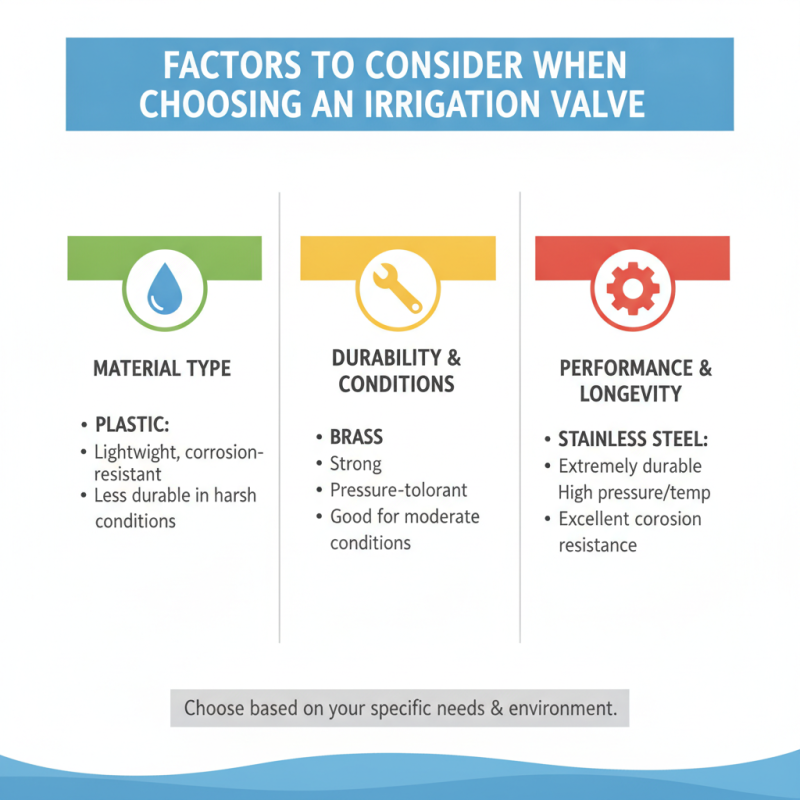
When selecting an irrigation valve, several important factors come into play. The valve's material is crucial. Common options include plastic, brass, and stainless steel. Each offers unique benefits and drawbacks. For instance, plastic valves are lightweight and resistant to corrosion, but may not endure harsh conditions as well as metal counterparts.
Another vital aspect is valve type. There are manual, automatic, and solenoid valves. Manual valves require physical operation, while automatic and solenoid valves offer convenience. However, automatic systems can introduce complications. It's essential to assess the specific needs of the irrigation system and how often adjustments will be made.
The flow rate is equally significant. Matching the valve’s capacity with the system’s requirements ensures optimal performance. Additionally, compatibility with existing infrastructure cannot be overlooked. Misalignment can cause leaks and inefficiencies. Therefore, thorough measurements and compatibility checks are necessary when considering a purchase.
Comparison of Manual vs. Automatic Irrigation Valves
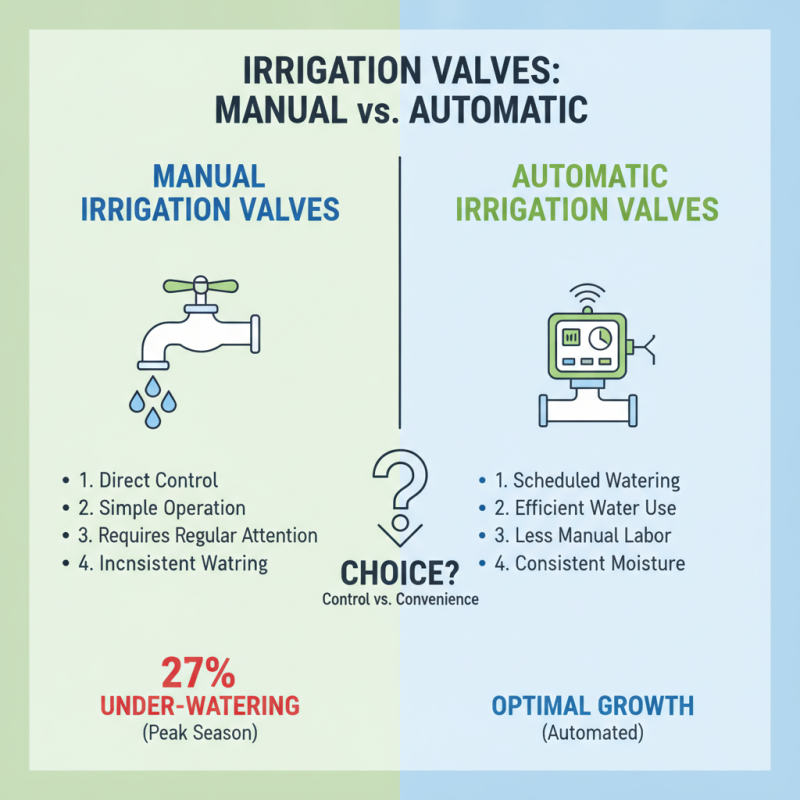
When choosing between manual and automatic irrigation valves, several factors come into play. Manual valves require direct intervention for operation. This gives users complete control over water usage and timing. Many gardeners prefer this method for its simplicity. However, it demands regular attention and can lead to inconsistent watering. Studies show that around 27% of irrigators experience under-watering during peak seasons due to forgetfulness or scheduling conflicts.
In contrast, automatic irrigation valves offer greater convenience. They are designed to operate based on preset schedules or moisture levels. Research indicates that automatic systems can reduce water usage by up to 30% when compared to manual methods. This is due to their precision in aligning water application with plant needs. However, reliance on technology can be a double-edged sword. If malfunction occurs, it might lead to overwatering, causing plant stress.
While automatic systems provide efficiency, they also involve upfront investment and maintenance. Users must weigh the need for a reliable system against the potential for technical failures. For many, adopting a mixed approach—using both manual and automatic valves—can balance control and efficiency. This varied strategy can address the unique demands of different plants while maximizing water conservation.
Sustainability and Efficiency in Modern Irrigation Valves
Modern irrigation valves play a crucial role in sustainable agriculture. They help optimize water usage while enhancing crop health. Efficient valves ensure that water is delivered exactly where and when it is needed. This precision reduces waste significantly, leading to better resource management. Additionally, many new designs incorporate materials and technologies that minimize environmental impact.
Many users may overlook the importance of valve maintenance. Over time, wear and tear can lead to inefficiencies. Regular checks can prevent leaks and blockages that waste water. In the pursuit of sustainability, adopting automatic or smart valves can further enhance efficiency. These systems adjust flow based on real-time data, providing optimal irrigation under various conditions.
It's essential to consider both functionality and reliability when choosing irrigation valves. While modern options often tout advanced features, basic models can offer solid performance. In this dynamic field, continual learning and adaptation are key. Reflecting on personal experiences can often reveal insights about what truly matters in irrigation solutions.
Best Irrigation Valve Options for Global Buyers
This chart illustrates the efficiency ratings of different irrigation valve types, highlighting the best options for sustainability and efficiency in modern irrigation systems. The Smart Valve stands out with a high efficiency rating, making it a preferred choice for environmentally-conscious buyers.
Global Brands Leading the Irrigation Valve Market Today
The global irrigation valve market is evolving, driven by emerging technologies and changing agricultural needs. Various companies implement innovative designs for better water management. Efficient water usage is critical as farmers face climate challenges.
Brands focus on durable materials for longevity. High-quality valves are essential for minimizing leaks. They enhance system performance and reduce maintenance costs. Some products may use complex technology that could confuse users. An ideal choice balances usability with advanced features.
Designs differ across brands, impacting effectiveness. Some valves may not fit every system, leading to wasted water. Understanding specific agricultural requirements is key. The right decision can significantly improve yield and sustainability. This market continuously adapts, reflecting a commitment to better practices.