2026 Best Irrigation Rotor Heads for Global Buyers?
Choosing the right Irrigation Rotor Heads in 2026 requires more than comparing spray distance or package prices. Global buyers face different water pressures, soil conditions, climate patterns, and installation standards. A rotor performing well in California may struggle in a low-pressure greenhouse or a windy coastal field.
This guide examines practical options for residential lawns, sports grounds, commercial landscapes, and agricultural borders. It considers adjustable arcs, precipitation rates, nozzle flexibility, filtration needs, gear-drive durability, and available replacement parts. Field experience shows that a strong rotor can still fail when installers ignore dirty water, poor alignment, or insufficient pressure. Small details matter.
We also look at manufacturer documentation, warranty clarity, testing information, and distributor support. Reliable suppliers should publish operating ranges and explain maintenance requirements. Buyers should verify local fittings and water regulations before placing large orders. Standards and product availability can vary by country.
No rotor is perfect. Even premium models may require adjustment after installation. Wind can distort coverage, and compact sites may expose overspray that product brochures rarely emphasize. The best choice balances performance, serviceability, cost, and long-term water efficiency rather than chasing the highest advertised radius. Our comparison aims to help global buyers make a defensible decision, while recognizing that real sites often challenge laboratory specifications. Expect practical guidance, careful limitations, and a few conclusions worth questioning.
What Irrigation Rotor Heads Are and How They Work
2026 Best Irrigation Rotor Heads for Global Buyers?
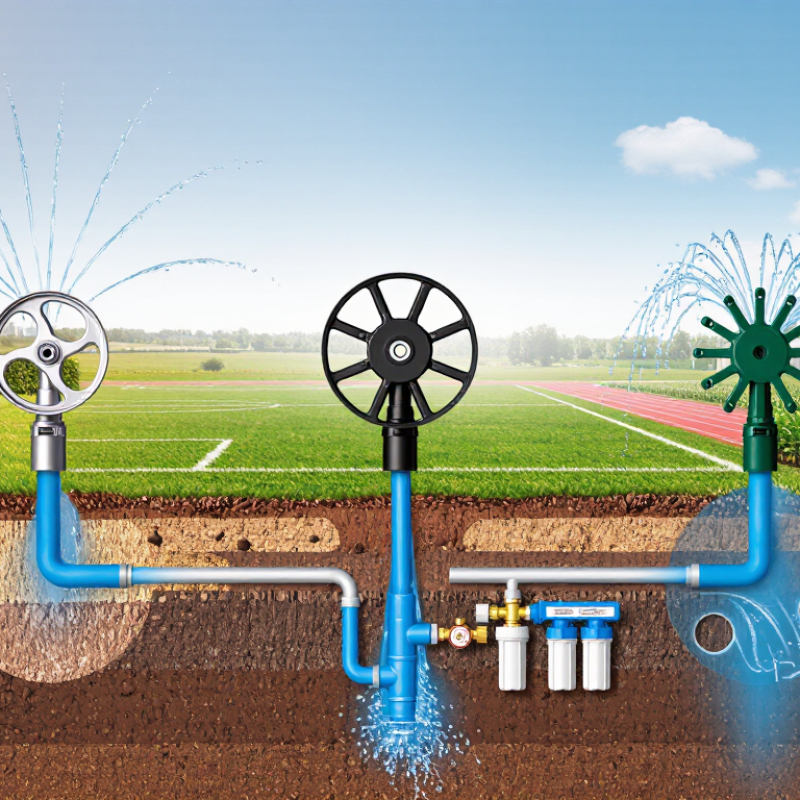
Irrigation rotor heads distribute water through rotating streams across wide turf areas. A built-in gear mechanism controls the rotation. Nozzles shape the spray pattern and application rate. Pressure drives the rotor, but excessive pressure creates mist and uneven coverage. Field inspections often find dry edges beside saturated centers. That pattern signals poor spacing, pressure loss, or incorrect nozzle selection.
The head should match the landscape, soil, and available water pressure. Larger rotors suit open lawns, sports grounds, and public parks. Smaller models fit narrow residential zones. According to FAO AQUASTAT, agriculture accounts for roughly 70% of global freshwater withdrawals. Efficient distribution therefore matters beyond appearance. The US EPA WaterSense program reports that landscape irrigation can represent nearly 30% of household water use in the United States. Rotor systems with matched precipitation rates can reduce runoff when zones are designed correctly.
A rotor does not save water by itself. It needs level installation, clean filters, and seasonal adjustment. The ASABE/ANSI S398.1 testing standard emphasizes measurable uniformity and application performance. Buyers should compare radius, flow rate, pressure range, nozzle options, and local service access. Hard water may clog small passages. Wind can also distort long-range streams. I would not trust catalogue distance alone. A simple catch-can test can reveal uneven output within fifteen minutes. Some sites still need drip irrigation around shrubs, because rotors often overwater irregular planting beds.
2026 Best Irrigation Rotor Heads for Global Buyers
What irrigation rotor heads are and how they work
Irrigation rotor heads rotate a stream of water across a set arc or full circle, distributing water over larger areas than fixed spray heads. Compact rotors are suited to small lawns, full-size rotors are common for residential and commercial turf, and large-turf rotors cover sports fields, parks, and golf-course areas. The values shown are typical operating figures; actual performance depends on nozzle selection, pressure, arc setting, wind, and system design.
Best Irrigation Rotor Head Types for Different Landscapes
Choosing the best irrigation rotor head starts with the landscape, not the catalog. FAO AQUASTAT reports that agriculture uses about 70% of global freshwater withdrawals. That pressure makes distribution uniformity and runoff control practical buying criteria. For broad turf, gear-driven rotors suit longer throw and adjustable arcs. Use matched-precipitation models across each zone. Narrow lawns need compact rotary nozzles, because wide spray can wet paths and walls. Slopes benefit from low-precipitation rotation and shorter cycles.
Open, windy sites may favor impact-style rotors with sturdy exposed mechanisms. They tolerate rough conditions, but they are not automatically more efficient. Dense planting beds often suffer from rotor overspray. Micro-irrigation may be more precise there. The U.S. EPA WaterSense program estimates outdoor irrigation can exceed 9 billion gallons daily nationwide. That figure is American, not global, yet it shows why head selection matters. Pressure testing remains essential. A head designed for 310 kPa can perform poorly at 170 kPa. Product charts sometimes feel too optimistic.
Tips: Measure pressure at the farthest head, then check catch-can results. Keep rotor spacing consistent, and separate high-flow heads from low-flow heads. Inspect after mowing or construction. Small alignment errors waste water quietly. I would not choose by advertised radius alone. Wind, soil, and plant height change performance. A qualified irrigation auditor can verify distribution uniformity before installation.
Installation, Adjustment, and Maintenance Guidelines
2026 Best Irrigation Rotor Heads for Global Buyers: Installation, Adjustment, and Maintenance Guidelines
Correct installation starts with clean pipework, stable pressure, and a level rotor body. A tilted head creates a weak arc and uneven grass coverage. Set the nozzle before final adjustment. Match the arc to the planting area, not the sidewalk. The U.S. Environmental Protection Agency’s WaterSense research shows that landscape irrigation can waste significant water through overspray, runoff, and poor scheduling. Keep spray away from walls and paved surfaces. Adjust the radius with small changes. Large reductions can distort the pattern. Field experience matters here. A pressure gauge is more reliable than guessing from spray height.
Run each zone during daylight and inspect every rotor closely. Look for dry crescents, misting, blocked nozzles, and water pooling near the head. The FAO AQUASTAT database reports that agriculture accounts for roughly 70% of global freshwater withdrawals, making efficient distribution increasingly important. Water slowly. Deeply. Avoid daily short cycles unless soil conditions demand them. Seasonal controller changes are essential across hot, cool, and monsoon climates. Flush the lateral line after construction or repairs. Clean filters and nozzles regularly. Replace damaged seals before leakage becomes visible. I still recheck coverage after heavy rain because soil settles and head levels change. Perfect uniformity is difficult. Careful measurement is better than confident assumption.
How Global Buyers Can Evaluate Quality, Cost, and Suppliers
2026 Best Irrigation Rotor Heads for Global Buyers?
Global buyers should judge rotor heads in real field conditions, not attractive catalog photos. Check spray distance, precipitation rate, arc adjustment, and pressure tolerance. A reliable rotor should maintain even coverage when pressure changes slightly. Ask for test reports showing flow rates at several pressure levels. Inspect the nozzle filter, drive mechanism, seals, and connection threads. Small defects often become expensive failures.
Cost evaluation requires more than the unit price. Include tooling, packaging, freight, import charges, spare parts, and installation labor. Request a clear quotation with delivery terms and minimum order quantities. Compare samples before placing a large order. Measure actual water distribution across dry and wet zones. It is a simple test. Keep the results.
Supplier reliability needs practical evidence. Review production capacity, quality-control records, material specifications, and corrective-action procedures. A factory should explain how it handles rejected batches. Ask for sample approval documents and consistent product identification. Video meetings help, but an independent inspection provides stronger evidence. Certifications can support trust, yet they do not replace performance testing.
No evaluation is perfect. I have seen buyers focus on low prices and overlook inconsistent springs or brittle plastic. That mistake can affect an entire irrigation project. Consider communication speed, technical support, replacement availability, and realistic lead times. A supplier that admits limitations may be more dependable than one making perfect promises.
2026 Best Irrigation Rotor Heads for Global Buyers? - How Global Buyers Can Evaluate Quality, Cost, and Suppliers
| Anonymous Product Configuration |
Typical Application |
Pop-Up Height |
Working Radius |
Typical Flow Rate |
Recommended Pressure |
Arc Adjustment |
Indicative FOB Cost / Unit |
Quality and Purchasing Assessment |
| Compact residential gear-drive rotor |
Small lawns, narrow planting areas, and landscape zones |
10 cm / 4 in |
5.5–9.0 m |
4.5–13 L/min |
2.1–3.5 bar |
40°–360° |
US$4.50–9.00 |
Select models with stainless-steel adjustment components, replaceable nozzles, sealed gears, and documented flow-pressure charts. |
| Medium-area commercial rotor |
Public landscaping, schools, hotels, and residential developments |
10 cm / 4 in |
7.6–13.7 m |
8–35 L/min |
2.8–4.8 bar |
40°–360° |
US$8.00–16.00 |
Prioritize matched-precipitation nozzle sets, flow regulation, pressure compensation, and a cycle-tested drive assembly. |
| Large-area long-range rotor |
Sports fields, parks, large lawns, and open commercial sites |
10–15 cm / 4–6 in |
11.0–18.0 m |
18–75 L/min |
3.5–6.9 bar |
30°–360° |
US$15.00–32.00 |
Verify trajectory, wind performance, nozzle uniformity, riser strength, and actual radius at the buyer’s operating pressure. |
| Low-flow water-saving rotor |
Water-restricted landscapes, sloped sites, and sandy soils |
10 cm / 4 in |
5.0–9.5 m |
2.5–12 L/min |
2.1–4.1 bar |
45°–360° |
US$7.00–18.00 |
Look for low-precipitation nozzles, pressure-regulating stems, check valves, and published distribution-uniformity results. |
| Heavy-duty stainless-steel rotor |
Public infrastructure, coastal locations, and high-use commercial projects |
10–15 cm / 4–6 in |
8.0–16.0 m |
10–60 L/min |
2.8–6.2 bar |
30°–360° |
US$22.00–48.00 |
Higher cost can be justified where corrosion resistance, vandal resistance, long service intervals, and spare-part availability are required. |
| Agricultural boundary rotor |
Orchard edges, nursery blocks, pasture boundaries, and dust-control zones |
Above-ground or 10 cm pop-up |
12.0–25.0 m |
25–120 L/min |
3.5–7.0 bar |
20°–360° |
US$18.00–55.00 |
Confirm filtration requirements, wear resistance, nozzle material, spare-part lead time, and compatibility with the existing pump system. |
|
Buyer note: The figures are practical industry benchmark ranges for anonymous rotor-head configurations, not quotations for a specific supplier or brand. Actual radius and flow vary with nozzle design, pressure, elevation, water quality, filtration, and installation spacing. Before ordering, request independent flow-pressure test data, material specifications, quality-control records, sample approval, warranty terms, spare-part support, and a landed-cost calculation including freight, duties, and packaging.
|