Leave Your Message
Choosing the right Irrigation System Sprinklers in 2026 requires more than comparing spray distance and price. A healthy lawn, vegetable bed, or commercial landscape needs water delivered at the correct rate. Soil texture, plant type, local climate, pressure, and available water all influence that decision. A sprinkler that performs well on sandy soil may create runoff on compacted clay.
This guide examines current sprinkler designs, practical efficiency features, and installation requirements. It considers rotary, fixed-spray, impact, drip-compatible, and smart-controlled options. It also explains how nozzle patterns, flow rates, wind exposure, and coverage overlap affect real performance. Small details matter. A clogged filter can distort the spray pattern. Low pressure can leave dry patches beside visibly wet areas. A poorly adjusted head may water a driveway instead of the roots.
Field experience and manufacturer specifications provide useful evidence, but neither replaces a site assessment. Measure pressure at the irrigation point, observe sun and shade, and test coverage with simple catch cups. The results may challenge an initial assumption. More powerful is not always better. Smart controls can reduce waste, yet they still depend on accurate weather settings and functioning sensors. This guide aims to support careful, informed choices using transparent criteria rather than exaggerated promises. Conditions differ widely. That is the difficult part. The best system is the one that distributes water evenly, operates reliably, and suits the landscape’s actual needs.
How to Choose the Best Irrigation System Sprinklers in 2026?
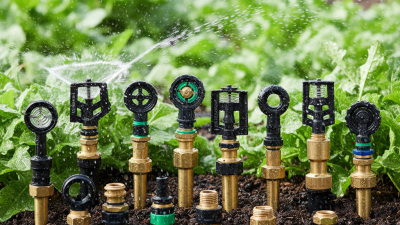
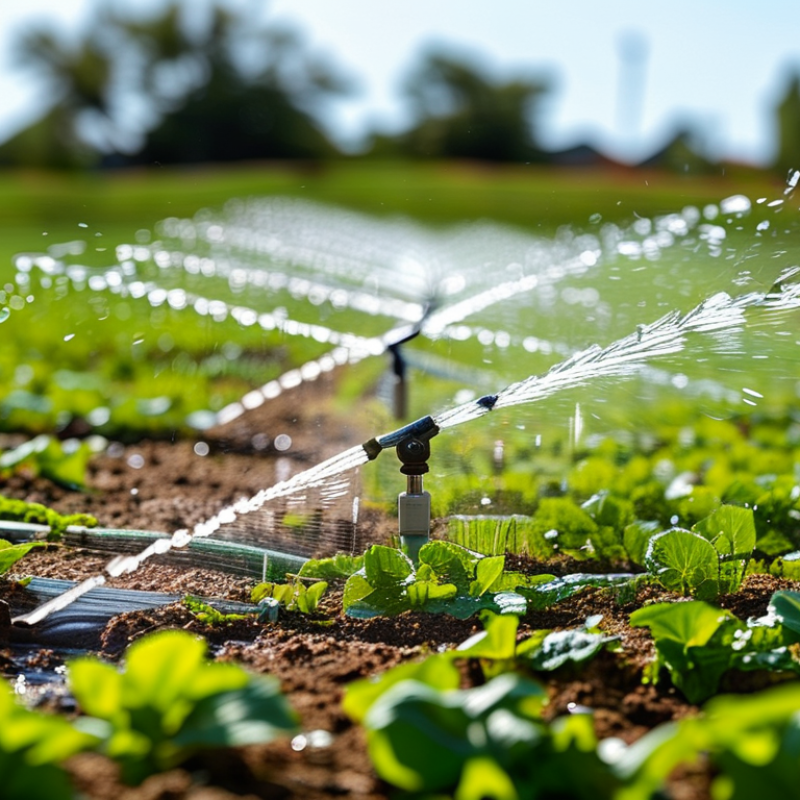
Irrigation sprinklers distribute pressurized water across soil through small nozzles. A valve opens, water enters the pipe, and pressure pushes it through each sprinkler head. Fixed heads create a steady fan-shaped spray. Rotary heads move streams across wider areas. Pop-up models stay below the surface until watering begins. Simple parts matter: valves, filters, pipes, nozzles, and a controller must work together.
Start with the landscape, not the sprinkler catalog. Measure water pressure and flow at the outdoor connection. Then observe the soil. Sandy soil absorbs water quickly, while clay may form puddles. Sloped ground needs shorter cycles to reduce runoff. Wind also changes spray patterns, especially in open gardens. Match the sprinkler’s coverage and precipitation rate to the plant zone. Lawns, flower beds, and vegetable rows rarely need identical settings.
I once planned a neat rectangular layout, but a fence blocked part of the spray. The drawing looked correct. The garden disagreed. Place empty cans around the area during a test cycle. Compare the water depth in each can after ten minutes. Uneven depths reveal poor spacing or pressure problems. Choose adjustable nozzles for irregular corners, but avoid excessive adjustment. They can create weak, inconsistent streams. A reliable system should water evenly, remain accessible for cleaning, and allow seasonal changes. Needlessly complicated controls often become neglected. Practical simplicity usually wins.
Compare common sprinkler types by operating method, typical coverage, water use, pressure requirements, and recommended applications.
| Sprinkler Type | How It Works | Typical Coverage | Typical Flow Rate | Recommended Operating Pressure | Best Applications | Water-Efficiency Considerations |
|---|---|---|---|---|---|---|
| Fixed Spray Sprinkler | Sprays water through a fixed nozzle pattern, usually covering a quarter, half, or full circle. | 2–5 m radius | 4–20 L/min | 1.4–3.0 bar | Small lawns, planting beds, narrow garden areas, and zones with simple layouts. | Provides even coverage over small areas, but the relatively high precipitation rate can cause runoff on compacted or sloped soil. |
| Rotary Spray Nozzle | Uses rotating streams or gears to distribute several narrow streams across a circular or adjustable pattern. | 4–8 m radius | 2–12 L/min | 2.1–4.1 bar | Residential lawns, mixed soil types, and areas where lower application rates are needed. | Usually applies water more slowly than fixed sprays, reducing runoff and improving uniformity when correctly spaced. |
| Impact Sprinkler | A spring-loaded arm repeatedly strikes the water stream, rotating the sprinkler head over a selected arc or full circle. | 8–18 m radius | 10–75 L/min | 2.8–5.5 bar | Large lawns, open landscapes, sports fields, and agricultural plots. | Offers long throw distances and strong resistance to clogging, but wind can distort the water pattern. |
| Gear-Drive Rotor | An internal gear mechanism rotates the stream smoothly through an adjustable arc or full circle. | 7–15 m radius | 6–55 L/min | 2.1–4.8 bar | Medium and large lawns requiring fewer sprinkler heads and consistent head-to-head coverage. | Lower precipitation rates can reduce runoff, but correct spacing and adequate pressure are essential for uniform coverage. |
| Bubbler Sprinkler | Releases a controlled, relatively low stream or bubbling flow near the soil surface. | 0.3–1.2 m radius | 1–8 L/min | 0.7–2.1 bar | Trees, shrubs, raised beds, containers, and deep-rooted landscape plants. | Limits wind drift and directs water to the root zone, but basins or soil infiltration must be managed to prevent pooling. |
| Micro-Sprinkler | Uses small spray or rotating emitters mounted on stakes or short risers to irrigate localized areas. | 1–5 m radius | 20–150 L/h | 1.0–2.5 bar | Orchards, nurseries, vegetable beds, greenhouses, and irregular planting areas. | Uses less water than many conventional lawn sprinklers and can be targeted to plant root zones, although filters are important to prevent clogging. |
| Oscillating Sprinkler | Moves a row of jets back and forth to create a rectangular or square watering pattern. | 6–15 m length | 10–35 L/min | 2.0–4.0 bar | Temporary watering of rectangular lawns and garden beds using an above-ground hose connection. | Convenient and easy to reposition, but exposed water streams are more vulnerable to wind and evaporation. |
| Traveling Sprinkler | Moves across a lawn or field along a hose or cable while its rotating arms distribute water. | Up to 1,000 m² per setup | 15–45 L/min | 2.8–4.8 bar | Large open lawns and temporary irrigation where a permanent underground system is not installed. | Can cover large areas with limited setup, but performance depends on a clear travel path, adequate pressure, and consistent speed. |
| Low-Precipitation Spray Head | Uses specially designed nozzles to distribute water at a slower rate than conventional fixed sprays. | 2–5 m radius | 2–12 L/min | 1.4–3.0 bar | Sloped lawns, clay soils, narrow planting strips, and areas prone to surface runoff. | The slower application rate allows more infiltration and may reduce runoff when watering cycles are scheduled correctly. |
Note: Flow rate, radius, and pressure are typical operating ranges rather than universal specifications. Actual performance depends on nozzle size, pipe diameter, elevation, water quality, wind, spacing, and system pressure. For lawn systems, head-to-head coverage and a rain sensor or soil-moisture sensor can improve water management.