Choosing the right Irrigation System Valve in 2026 is not a simple matter of comparing prices.
Global buyers must match valve design with water quality, pressure, climate, crop needs, and maintenance skills. A valve that performs well in a California orchard may struggle in a dusty African greenhouse. Local pipe standards and replacement access also matter.
John L. Merriam, a respected irrigation engineer, wrote, “Irrigation is the artificial application of water to the soil for the purpose of supplying the moisture essential for plant growth.” His definition remains practical. Valves control that water with precision.
This guide examines the leading valve types for international projects. It covers solenoid valves, hydraulic valves, pressure-reducing valves, check valves, isolation valves, and air-release valves. Each type solves a different field problem. Some manage automatic scheduling. Others protect pumps, pipelines, or sensitive drip emitters.
No valve wins everywhere.
Buyers should examine body materials, pressure ratings, flow capacity, sealing performance, connection standards, and spare-part availability. Brass may suit clean water systems, while reinforced plastic can resist corrosion in many agricultural environments. Yet neither choice is automatically superior.
Field experience often exposes weaknesses that catalogs hide. A filter may clog. A seal may harden under heat. A control signal may fail during a power interruption. These risks deserve honest attention.
The best purchasing decision balances efficiency, reliability, installation cost, and long-term service. This article provides a practical framework for comparing Irrigation System Valve options before committing to a global supply contract. 在天天中彩票
Agriculture remains the largest user of freshwater worldwide. FAO AQUASTAT estimates that farming represents about 69% of global freshwater withdrawals. The UNESCO World Water Development Report 2024 also places agriculture near 70%. These figures vary by country, season, and measurement method. Still, the pressure is clear.
Irrigation valves help control where this water goes. Isolation valves stop flow during maintenance. Check valves reduce backflow risks. Pressure-regulating valves protect drip lines from excessive pressure. Air-release valves remove trapped air, which can cause uneven watering and pipe damage. In sandy fields, a filter and reliable control valve often matter more than a complex automation system.
Field experience shows that valve selection must follow water quality, elevation, pipe size, and crop needs. A small pressure mistake can leave distant plants dry. Too much pressure can damage emitters. That is not theoretical.
Global buyers should examine test records, material compatibility, spare-part access, and operating temperature ranges. Local technicians also need clear service procedures. Cost alone is a weak guide. A cheaper valve may consume more water through leakage or unstable control. The 70% statistic deserves caution, too. It describes withdrawals, not always actual consumption, and reporting remains uneven. Better irrigation depends on accurate measurement, not impressive assumptions.
2026 Best Irrigation System Valve Types for Global Buyers?
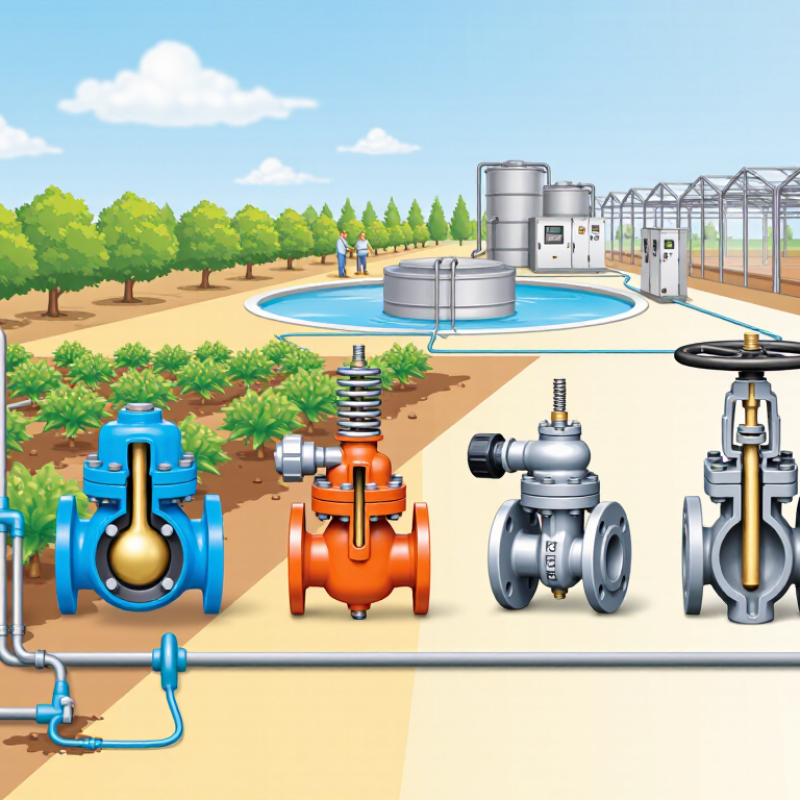
Choosing an irrigation valve starts with flow, pressure, water quality, and maintenance access. Gate valves suit main lines that remain fully open or closed. They reduce obstruction, but their slow operation can frustrate operators during leaks. Ball valves provide quick shutoff and reliable sealing for smaller zones. They are practical near filters, pumps, and service points.
Globe valves control flow more precisely, although they create greater pressure loss. Butterfly valves fit large pipelines because they are compact, lightweight, and fast to operate. Their disc remains inside the flow path, so poor sizing can disturb pressure. Check valves stop reverse flow and protect pumps from damaging backspin. However, dirty water may hold the disc open. Field experience shows that valve selection often fails when buyers study diameter but ignore actual operating conditions.
Tips: Confirm working pressure, temperature, connection standards, and actuator needs before ordering. Match the valve material with fertilizer exposure and local water chemistry. Test check valves with real flow, not only bench air. Leave service space around every valve. A cheaper valve may cost more after repeated cleaning. Also, review seasonal demand; a system sized for today may struggle during expansion. Go slowly. Reliable irrigation depends on small details.
| Valve Family | Primary Function | Flow Path and Shutoff Mechanism | Flow-Control Capability | Typical Irrigation Applications | Main Advantages | Main Limitations | Water Quality Suitability | Automation Potential | Buyer Selection Priority |
|---|---|---|---|---|---|---|---|---|---|
| Gate Valve | Isolation and on/off service | A wedge or slab gate moves vertically away from or into the flow path. When fully open, the flow passage is generally straight. | Poor for throttling Best used fully open or fully closed. |
Mainline isolation, pump-station headers, large distribution pipelines, and seasonal system shutdowns. | Low flow resistance when fully open; suitable for relatively large pipelines; effective for infrequent isolation. | Slow operation; the sealing surfaces can be damaged by suspended solids; partial opening can cause vibration, erosion, and inefficient control. | Best with clean or moderately filtered water. Avoid using as a regulating device in sediment-heavy water. | Possible with an electric or hydraulic actuator, but usually less convenient for frequent automatic cycling. | Choose when reliable pipeline isolation is more important than frequent adjustment or fast operation. |
| Ball Valve | Fast isolation and zone control | A drilled spherical ball rotates 90 degrees inside the valve body to align or block the flow passage. | Limited throttling Suitable for on/off control; prolonged partial opening may accelerate seat wear. |
Small and medium irrigation zones, drip manifolds, filter outlets, fertigation branches, and hose or pipe connections. | Quarter-turn operation; compact design; tight shutoff; low pressure loss when fully open; easy manual operation. | Small flow passages may clog in dirty water; high operating torque can occur if solids damage the seats; not ideal for continuous flow regulation. | Best with filtered water. Select a full-port design where debris passage and low pressure loss are important. | Very good for electric, hydraulic, or pneumatic quarter-turn actuation. | Choose when fast, compact, and positive shutoff is required for individual zones or equipment branches. |
| Globe Valve | Flow regulation and isolation | A movable disc travels toward or away from a stationary seat. The flow changes direction inside the body. | Excellent for throttling Provides more precise manual or automatic flow adjustment than gate or ball valves. |
Pressure-reducing assemblies, flow-control stations, chemical injection lines, and applications requiring gradual adjustment. | Good control accuracy; stable regulation; suitable for repeated adjustment and moderate flow-control duties. | Higher pressure loss than straight-through valve designs; larger and heavier for the same nominal size; internal parts may wear under abrasive service. | Suitable for clean, filtered, or treated water. Use abrasion-resistant construction where suspended solids are unavoidable. | Very good with electric or hydraulic actuators and position-control systems. | Choose when precise flow or pressure adjustment is more important than minimum pressure loss. |
| Butterfly Valve | Large-line isolation and control | A circular disc rotates around a central or offset shaft inside the pipeline. A 90-degree rotation moves between open and closed positions. | Moderate throttling Can regulate flow over a useful range, but control quality depends on the disc design and operating conditions. |
Large mainlines, pump discharge lines, filtration systems, water-treatment sections, and irrigation distribution networks. | Lightweight and compact compared with many large gate valves; quick quarter-turn operation; economical for larger diameters; easy to automate. | The disc remains in the flow path when open; pressure loss is higher than a full-port gate valve; seat and disc selection are important for abrasive water. | Suitable for clean to moderately turbid water when the lining and disc materials match the service conditions. | Excellent for electric, hydraulic, or pneumatic actuation and remote zone management. | Choose for large-diameter lines where compact size, quick operation, and automation are important. |
| Swing Check Valve | Prevention of reverse flow | A hinged disc swings away from the seat in the forward-flow direction and closes when flow reverses. | Not a regulating valve Designed for automatic non-return protection. |
Pump discharge lines, mainline protection, reservoirs, and systems where reverse flow could damage pumps or contaminate water sources. | Low pressure loss at suitable forward-flow velocities; no external power required; useful in larger pipelines. | May slam during rapid flow reversal; requires suitable installation orientation and sufficient forward velocity; the disc can be affected by solids. | Works with clean or moderately filtered water. Consider non-slam designs for systems with frequent pump starts and stops. | Normally self-acting; position monitoring can be added, but external actuation is not usually required. | Choose when dependable reverse-flow protection is needed on pump and mainline sections. |
| Wafer or Lift Check Valve | Compact reverse-flow protection | A disc, piston, or plate lifts from the seat during forward flow and returns to the seat when flow stops or reverses. | Not a regulating valve Used for automatic one-way flow protection. |
Compact pump assemblies, filtration skids, fertigation equipment, and pipelines with limited installation space. | Short face-to-face length; lightweight; can close faster than some swing designs; suitable for space-constrained installations. | Needs adequate forward flow to open fully; may create more pressure loss than a full-bore swing check; sensitive to poor alignment and debris. | Best with clean or well-filtered water, especially for smaller passages and spring-loaded designs. | Normally self-acting; optional sensors may be used for system monitoring. | Choose when compact installation and fast non-return action are more important than minimum pressure loss. |
| Foot Valve | Pump suction protection and priming retention | A check valve installed at the intake end of a suction pipe allows water to enter while preventing the suction line from draining back. | Not a regulating valve Maintains one-way flow and helps retain pump prime. |
Surface-water intake, storage tanks, shallow wells, and pump suction lines that require protection against drain-back. | Combines non-return action with an intake screen; helps reduce loss of prime; protects pumps from large debris when properly screened. | Screen blockage can restrict pump flow; additional suction loss must be considered; regular inspection may be needed in dirty water. | Suitable for relatively clean water or water with a correctly sized, serviceable intake screen. | Usually self-acting; remote monitoring can be used to detect blockage or abnormal suction conditions. | Choose when maintaining pump prime and protecting the suction line are essential design requirements. |

For global irrigation buyers in 2026, valve selection should begin with water pressure, not catalog popularity. FAO AQUASTAT data shows agriculture uses about 70% of global freshwater withdrawals. Small control errors can therefore become costly across large fields.
Solenoid valves offer fast, remote switching for drip zones and greenhouse benches. They need clean water, stable voltage, and protected wiring. A blocked filter can leave one bed dry while another keeps flowing. Hydraulic valves suit larger networks and long pipe runs. They use line pressure to open and close, reducing dependence on electrical infrastructure. However, incorrect pilot settings may create slow response or water hammer. Pressure regulators perform a different job. They stabilize downstream pressure, often protecting emitters from uneven discharge.
Field checks matter more than advertised flow rates. Measure inlet pressure at dawn and during peak demand. A regulator set near 2 bar may work for drip lines, but sprinklers usually require a different setting. The UN World Water Development Report 2024 identifies agriculture as the largest freshwater user, reinforcing the value of accurate control. I would not specify a solenoid for every project. Remote farms may prefer hydraulic control, while compact protected sites benefit from electrical automation. One detail is easy to miss: regulators do not replace shutoff valves. They manage pressure, not isolation. Mistakes still happen, especially when pipe friction is ignored.
The best irrigation valve in 2026 is not the largest or most automated model. It is the valve matched to flow, pressure, and crop needs. Solenoid valves suit zone control, while pressure-regulating valves protect drip lines from excessive inlet pressure. Hydraulic valves can serve larger networks, but their control systems need careful commissioning.
Sizing should begin with measured demand, not pipe diameter. Use the standard water relationship: Cv = Q / √ΔP, where Q is flow and ΔP is pressure loss. A valve with an excessive Cv may cause poor control at low flow. A restricted Cv can create weak emitters at the far end. The International Society of Automation describes Cv under defined water and pressure conditions, so field temperature and fluid differences still require review.
Drip irrigation can use 20–50% less water than conventional spray systems, according to the U.S. Environmental Protection Agency’s WaterSense guidance. The saving depends on spacing, filtration, wind, and maintenance. FAO reports that agriculture accounts for roughly 70% of global freshwater withdrawals, making small efficiency gains commercially important. A practical design keeps operating pressure within the emitter range and checks flow at the last lateral. That detail is often missed. A neat spreadsheet can still mislead when elevation changes by only a few metres. Recheck pressure after installation, because real networks rarely behave perfectly.
Typical flow-performance comparison for nominal 25 mm (1 in) valves at approximately 1 bar pressure drop.
The chart uses indicative fully-open Cv values for common irrigation valve categories. Flow can be estimated with Q = Cv × √(ΔP / SG), where Q is in US gallons per minute, ΔP is pressure drop in psi, and SG is fluid specific gravity. For equivalent size and pressure conditions, higher Cv generally means lower friction loss and greater available flow. Drip irrigation can reduce water use by approximately 20–50% compared with conventional spray irrigation when zones, pressure, filtration, and scheduling are correctly designed.
Values are engineering reference estimates only; actual Cv, operating pressure, flow rate, and savings vary by valve geometry, emitter layout, elevation, filtration, and system design.
For global irrigation buyers, valve selection starts with water risk, not price. A ball valve suits isolation. A butterfly valve serves larger pipes with lower operating effort. Control valves manage pressure and flow, but require accurate sizing.
In field inspections, backflow protection is often overlooked. EN 1717 classifies fluid hazards and guides protection against contaminated water entering the supply. Its requirements should match the installation’s actual risk.
Check the hazard.
Where a reduced pressure principle assembly is specified, ASSE 1013 provides a recognized performance reference. It uses two independently acting check valves and a relief zone. Installers should verify test ports, discharge routing, and service access.
A certificate alone is not enough.
Local authorities may require additional approval or periodic testing. In practice, specifications are rarely perfect; translations and regional interpretations can conflict.
Keep current test records beside the valve cabinet.
IP ratings describe enclosure protection, not hydraulic quality. IP65 resists dust and water jets, while immersion needs a higher suitable rating. Confirm exposure to sun, spray, mud, and washdown.
For electric actuators, ISO 5211 defines mounting interface dimensions. Matching the flange and drive square reduces adapter errors. Ask for dimensional drawings, material certificates, pressure data, and operating-cycle evidence.
Do not assume familiar connections fit every actuator. A small mismatch can stop a season’s irrigation.