2026 Top Irrigation Valve Buying Guide for Global Suppliers?
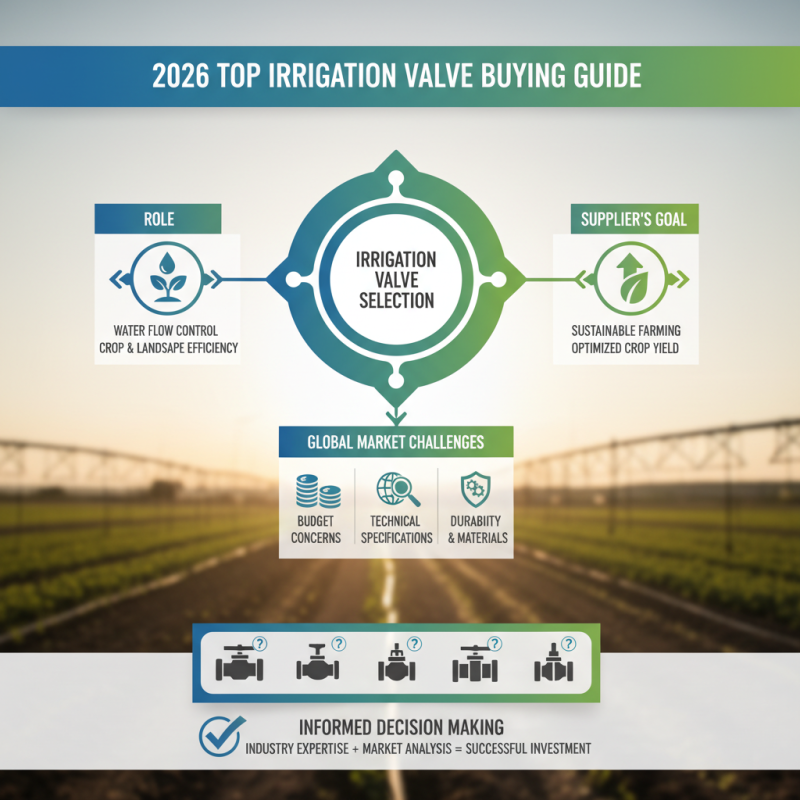
When it comes to effective irrigation systems, choosing the right irrigation valve is crucial. This component plays a vital role in controlling water flow to crops and landscapes. A reliable irrigation valve ensures efficiency and growth in agricultural practices. With the increasing demand for sustainable farming, suppliers must navigate various options carefully.
The market for irrigation valves continues to expand. Global suppliers face unique challenges in finding the best products that meet both quality and budget concerns. Factors like durability, materials, and technical specifications must be evaluated thoroughly. Suppliers often find themselves overwhelmed by choices, leading to difficulty in decision-making.
In this buying guide, we aim to clarify those choices. We provide insights based on industry expertise and market analysis. By understanding your needs and the role of each valve, you can make better-informed decisions. Choosing the right irrigation valve can significantly impact crop yield and resource management. It's not just about picking a product; it's about investing in sustainable agricultural practices.
Overview of Irrigation Valves and Their Importance in Agriculture
Irrigation valves play a crucial role in modern agriculture. They control the flow of water, ensuring crops receive the right amount. These valves help farmers manage water usage efficiently. With limited resources, proper irrigation techniques can improve yields significantly. Farmers rely on them to prevent overwatering or underwatering, which can damage crops.
Selecting the right irrigation valve is essential. There are various types, such as solenoid and gate valves. Each serves specific needs and environments. It’s important to understand the system design before making a purchase. Weather conditions and soil types also influence these choices. Poor selection can lead to water wastage and reduced crop health. The decision requires careful consideration and expertise.
Farmers often find it challenging to balance efficiency and cost. While there are many options, not all are suitable for every situation. Researching the best solutions is vital. Consulting with experts can provide valuable insights. It’s an ongoing process, and farmers must stay informed. As agricultural practices evolve, so must their irrigation strategies.
2026 Top Irrigation Valve Buying Guide: Importance of Irrigation Valves in Agriculture
This chart illustrates the market demand for various types of irrigation valves in the agricultural sector for the year 2026. It is evident that ball valves have the highest demand, followed by gate and butterfly valves, underscoring their importance in efficient water management for agriculture.
Types of Irrigation Valves: A Comprehensive Breakdown
When selecting irrigation valves, understanding the different types is essential. Irrigation valves come in various categories, each tailored for specific applications.
Gate valves are sturdy and provide reliable on/off control.
Ball valves offer quick operation and are ideal for high-flow systems.
Butterfly valves are lightweight and efficient for larger installations.
Keeping your system in mind when choosing a valve is crucial. Evaluate the water pressure and flow rate in your irrigation setup. This will help determine the best valve type. Remember to consider the material, as it affects durability and performance.
Tips: Always inspect the valves regularly for any signs of wear or corrosion. Replacing a faulty valve early can save on costly repairs later. Selecting the right size is also vital for efficient operation. If a valve is too small, it can limit flow; too large, and it may not seal properly. Evaluation of your system's needs will lead to better long-term results.
Key Features to Consider When Buying Irrigation Valves
When selecting irrigation valves, several key features can impact performance. First, consider the material of the valve. Common options include PVC, brass, and stainless steel. Each material offers different durability levels and resistance to corrosion. A high-quality valve should withstand environmental conditions.
Flow rate is another critical aspect. Valves should match the watering needs of your landscape. It's important to calculate the required flow rate before purchase. This ensures that you have the right valve for efficient irrigation. Also, look at the pressure rating to avoid potential failures.
Lastly, control mechanisms play a big role. Automated systems offer convenience but can complicate the setup. Manual valves might be easier for small applications. However, they require more user engagement. Think about your comfort level with technology before deciding. Small mistakes could lead to inefficiencies or system failures.
2026 Top Irrigation Valve Buying Guide for Global Suppliers - Key Features to Consider When Buying Irrigation Valves
| Feature |
Description |
Importance |
| Type of Valve |
Different types such as solenoid, manual, and electric valves. |
High |
| Flow Rate |
The maximum water flow the valve can handle, measured in gallons per minute (GPM). |
High |
| Material |
Common materials include PVC, brass, and stainless steel, affecting durability and corrosion resistance. |
Medium |
| Pressure Rating |
Indicates the maximum pressure the valve can withstand. |
High |
| Size |
Available sizes for pipes and fittings, important for compatibility. |
Medium |
| Automation Compatibility |
Ability to integrate with automated irrigation systems. |
High |
| Warranty |
Length and terms of warranty provided by the manufacturer. |
Medium |
| Maintenance Needs |
Frequency and type of maintenance required to keep the valve operational. |
Medium |
Top Global Suppliers for Irrigation Valves: Market Analysis
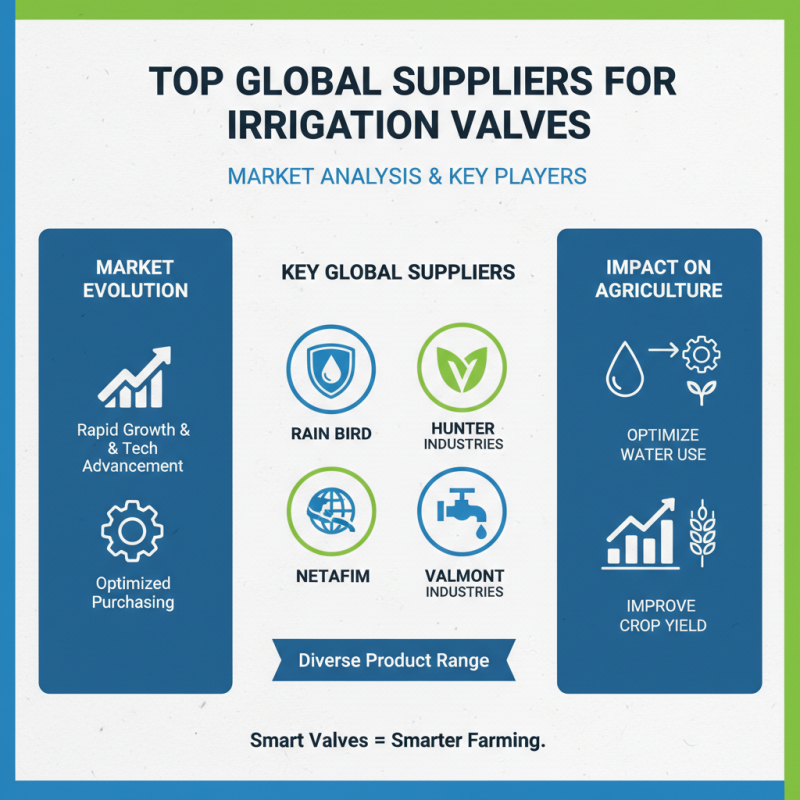
The global irrigation valve market is evolving rapidly. Understanding key suppliers is essential for effective purchasing decisions. Various manufacturers offer a range of products, impacting agricultural efficiency significantly. The right valve can optimize water use and improve crop yield.
Market analysis reveals diverse suppliers specializing in specific materials, functionalities, and innovations. Customers should evaluate options based on performance and reliability. Some suppliers excel in durability, while others focus on cost efficiency. This divergence can lead to confusion.
A consistent challenge is balancing quality with expense. Choosing lower-cost options may seem attractive, yet it can result in higher long-term costs due to maintenance and replacements. Researching suppliers thoroughly is vital. Look for those with proven track records in the sector. Online reviews and case studies can provide insights but may also be biased. Therefore, gather multiple perspectives before making decisions. This will build a robust understanding of the market landscape.
Future Trends in Irrigation Valve Technology and Design
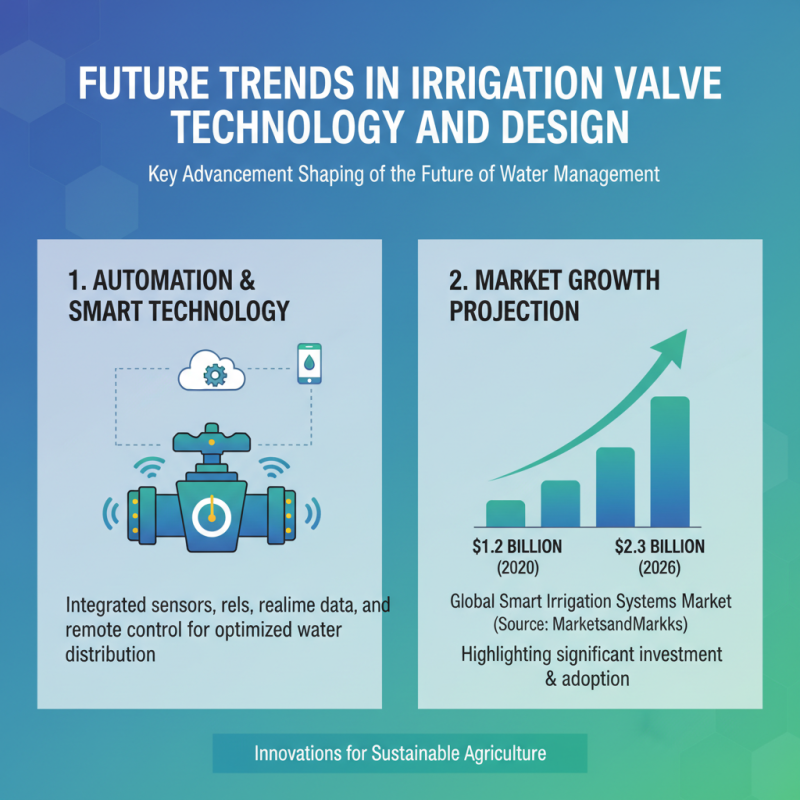
The evolution of irrigation valve technology is promising, with notable trends shaping its future. Key advancements include automation and smart technology integration. According to a report by MarketsandMarkets, the global market for smart irrigation systems is projected to reach $2.3 billion by 2026, highlighting a significant interest in this domain.
Sensor-equipped valves are gaining traction, allowing for precise water management. These systems can adjust flow rates based on real-time environmental data. A study from the Irrigation Association estimates that automated systems can reduce water waste by up to 30%. This not only conserves resources but also optimizes crop yield, reflecting a crucial intersection of sustainability and efficiency.
Moreover, the demand for durable materials is rising. New composite materials are being used to enhance resistance to corrosion and temperature fluctuations. This innovation addresses a common failure point in traditional systems, ultimately extending the lifespan of irrigation infrastructure. Nonetheless, implementing these advanced technologies presents challenges, such as the required upfront investment and the need for skilled personnel to manage complex systems.