How to Choose the Best Irrigation Rotor Sprinklers for Your Garden?
When it comes to maintaining a thriving garden, choosing the right tools is essential. Irrigation Rotor Sprinklers are a vital part of this equation. They ensure your plants receive adequate water, promoting healthy growth. However, selecting the best sprinkler can be daunting.
Consider the size of your garden. The type of plants you grow is important too. Some plants need more water than others. Look into the features of various models. You might want adjustable spray patterns. It helps customize the watering according to plant needs. Pay attention to the coverage area as well. A good sprinkler saves water and time.
Many gardeners overlook these details. They might rush into buying whatever is available. This can lead to overwatering or underwatering. Reflect on your garden's unique characteristics. Take the time to research. Choosing the best Irrigation Rotor Sprinklers can make all the difference in achieving a lush garden.
Understanding the Basics of Irrigation Rotor Sprinklers
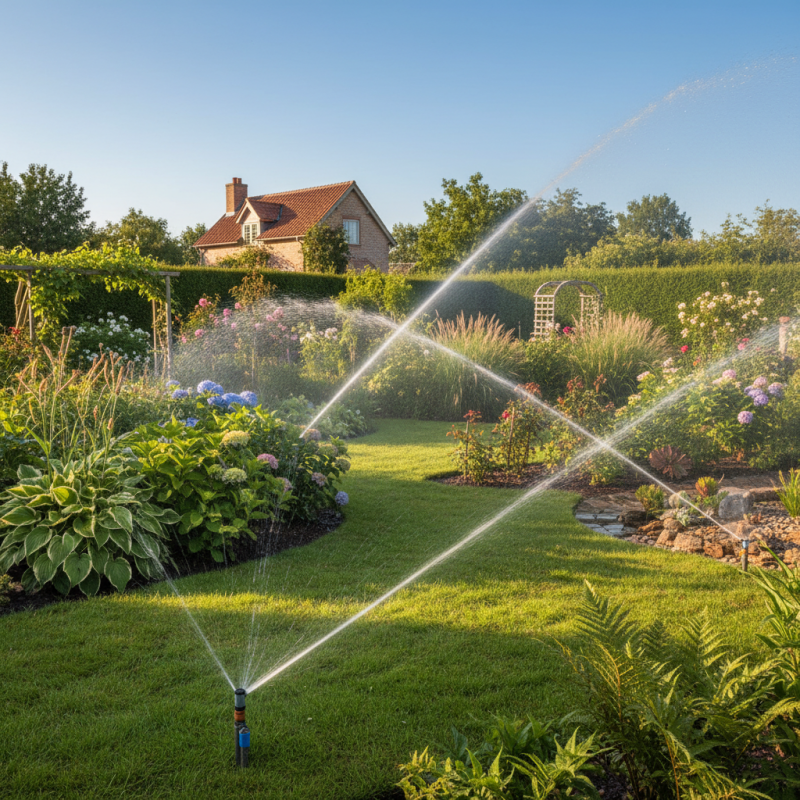
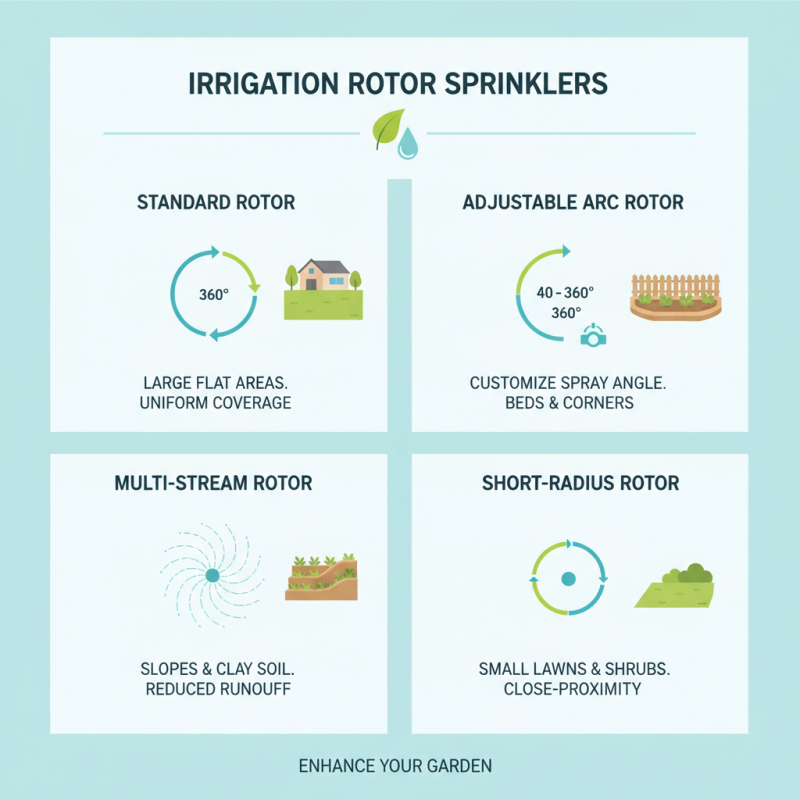
Understanding the different types of irrigation rotor sprinklers can greatly enhance your garden. These sprinklers come in various sizes and rotation patterns. They can cover large areas efficiently. Each type has its own unique features. Some are better for flat lawns, while others suit sloped gardens.
When choosing a sprinkler, consider the water pressure in your area. Some models work best with high pressure, while others are designed for lower pressure environments. Note that overspray can lead to water waste. Depending on your garden layout, a fixed spray might be more suitable.
Tips: Measure your garden size first. Identify areas that need more water. Watch how the wind affects water distribution. Adjust your choice based on these observations. Regular maintenance is key to keeping your sprinklers effective. Check for blockages and wear frequently. Avoid making assumptions about which type will work best. It's okay to experiment until you find the right fit.
Evaluating Your Garden’s Size and Water Requirements
Evaluating your garden’s size and water requirements is crucial for selecting the right irrigation rotor sprinklers. Begin by measuring your garden area. Knowing the dimensions helps in understanding how much water is needed. If you have a small garden, a few well-placed rotors might suffice. Larger gardens may require multiple sprinklers for even coverage.
Next, consider the types of plants in your garden. Different plants have varying water needs. Vegetables often require more water than decorative flowers. Pay attention to soil type as well. Sandy soils drain quickly and need more frequent watering. Clay soils, however, retain water longer, reducing the need for irrigation.
Assessing these factors makes it easier to choose the right rotor sprinklers. It’s important to avoid overwatering, which can lead to root rot. Conversely, underwatering can stunt growth. Sometimes, it takes a bit of trial and error to find the right balance. Adjusting sprinklers after observing how water distributes can lead to better results. Tailoring your approach based on your garden's unique needs is a vital step.
How to Choose the Best Irrigation Rotor Sprinklers for Your Garden? - Evaluating Your Garden’s Size and Water Requirements
| Garden Size (sq ft) |
Water Requirement (GPH) |
Recommended Rotor Type |
Coverage Radius (ft) |
Spray Pattern |
| 1000 |
10 |
Medium Rotor |
25 |
Partial Circle |
| 2000 |
20 |
Full-Size Rotor |
30 |
Full Circle |
| 3000 |
30 |
Heavy-Duty Rotor |
35 |
Adjustable Arc |
| 4000 |
40 |
Commercial Rotor |
40 |
Wide Coverage |
Comparing Different Types of Rotor Sprinklers Available
When selecting the right rotor sprinklers for your garden, it’s important to understand the range of options available. Rotor sprinklers typically vary in size, spray pattern, and application radius. For instance, a common type is the impact rotor, known for its durability and ability to cover larger areas efficiently. Reports indicate that impact rotors can achieve distances up to 100 feet, making them suitable for expansive gardens.
Another type is the gear drive rotor. These sprinklers operate with a quieter, smoother mechanism. They often provide more precise watering, which can reduce water waste. According to a study by the Irrigation Association, gear drive rotors can save up to 30% in water usage compared to traditional impact models when used correctly. However, they can be pricier initially, and their installation can sometimes be a bit complex.
Lastly, there's the variable arc rotor, which allows flexibility in the watering pattern. Gardeners often appreciate this adaptability, especially in oddly shaped lawns. However, setting it up can be tricky. Many users report difficulties in adjusting the arcs properly, leading to either overwatering or dry spots. Understanding these differences is crucial to maximizing efficiency and ensuring your garden thrives.
Types of Rotor Sprinklers and Their Coverage Area
This chart compares the coverage area of different types of rotor sprinklers suitable for garden irrigation. It helps in visualizing which type may best meet your garden's irrigation needs based on area coverage.
Key Features to Look for in Quality Rotor Sprinklers
When choosing rotor sprinklers for your garden, several key features stand out. Look for adjustable spray patterns. This allows you to customize the irrigation for different areas. Some plants need more water than others. A versatile sprinkler can meet varying needs.
Also, consider the range. Check if it can cover your entire garden efficiently. A good range reduces the need for multiple sprinklers.
Durability is another crucial point. Quality materials can withstand harsh weather. Think about how often you'll use them. Rust-resistant components are a plus. Ease of installation matters, too.
Complicated setups can become frustrating. Simple models often have user-friendly features. Remember, the more complex the sprinkler, the more potential issues may arise.
Take note of flow rate as well. Too high can waste water, while too low can under-water your plants. Always double-check if the sprinkler suits your water pressure. It’s wise to test different models before fully committing. This trial and error can lead to surprising discoveries about what works best for your garden.
Installation and Maintenance Tips for Optimal Performance
When it comes to installing irrigation rotor sprinklers, proper setup is crucial for optimal performance. Begin by mapping out your garden’s layout. Consider the type of plants you have and their water needs. The Irrigation Association reports that efficient sprinkler systems can reduce water waste by up to 50%. However, incorrect placement can lead to dry spots and over-saturation in other areas.
Maintenance plays a vital role in ensuring longevity. Inspect your rotors at least once a month. Look for clogs or damage that might hinder performance. A study by the US Geological Survey found that poorly maintained systems can create water runoff that negatively impacts local ecosystems. Regularly adjusting the nozzle settings helps fine-tune water distribution. Remember, the goal is to provide uniform coverage without overspraying onto hard surfaces, which is wasteful.
Consider the weather patterns in your area. Seasonal changes may dictate adjustments to your irrigation schedule. The USDA recommends adapting irrigation frequency based on rainfall and temperature. Keep track of watering trends and be prepared to rethink your strategy. Small changes in environment or plant growth can significantly affect your garden’s water needs.