How to Choose the Best Landscape Irrigation Controller for Your Garden?
Choosing the right Landscape Irrigation Controller can significantly affect your garden's health. According to Mark Johnson, an expert in irrigation technology, "Investing in a quality controller can save water and improve plant growth." His insights highlight the importance of selecting the best system for your needs.
A Landscape Irrigation Controller regulates water distribution. It helps maintain optimal moisture levels. However, many prefer automatic systems over manual ones without understanding their specific requirements. Factors like garden size, plant types, and local climate play crucial roles. Ignoring these can lead to inefficient watering and wasted resources.
Selecting an irrigation controller isn't always straightforward. A user-friendly interface and smart technology can enhance efficiency. Still, some advanced features may not be necessary for every gardener. It's essential to weigh the pros and cons carefully. Ensuring your choice aligns with your garden's needs will lead to a flourishing environment.
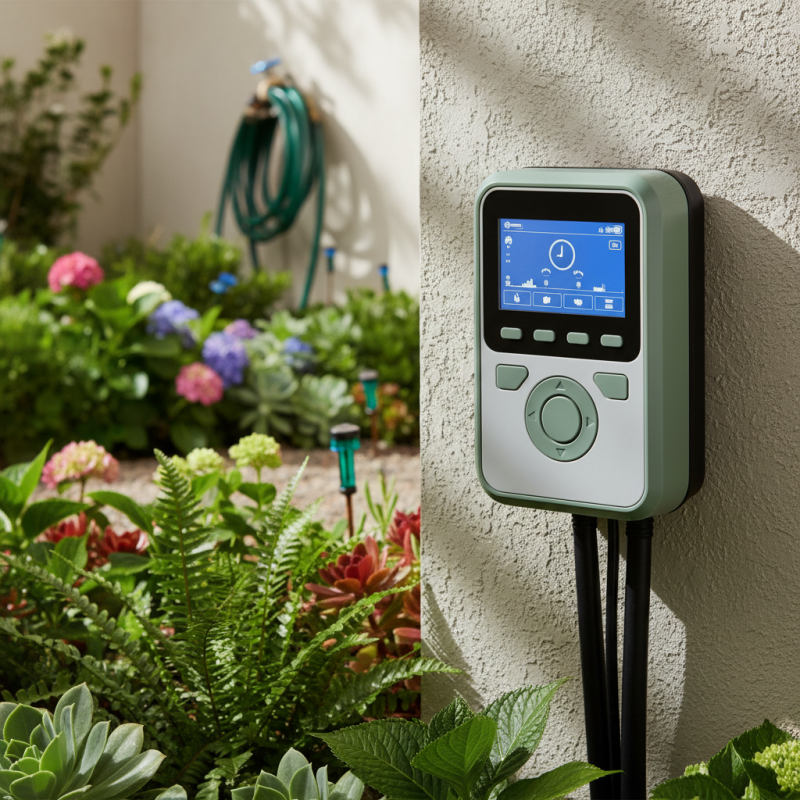
Understanding the Importance of Irrigation Controllers in Landscaping
Irrigation controllers are vital for maintaining healthy landscapes. They help manage water use efficiently, ensuring gardens thrive. A well-chosen controller minimizes water waste and maximizes plant health. Understanding their features can transform your garden care routine.
When selecting an irrigation controller, consider your garden’s specific needs. Look for features like weather-based adjustments. These help prevent overwatering during rainy days. Timers that accommodate different zones also provide better watering efficiency. Pay attention to ease of use as well. Sometimes, complex interfaces lead to neglect.
**Tips:** Regularly check the system for clogs or malfunctions. Adjust your settings seasonally to keep up with plant growth. Monitor local weather forecasts for extra savings on water. It's crucial to stay engaged with the system. Inattention can lead to dry patches or overwatering zones. Explore your options, but remember, sometimes simpler is better.
How to Choose the Best Landscape Irrigation Controller for Your Garden?
| Feature |
Importance |
Budget (USD) |
User Rating (Out of 5) |
| Weather Sensing |
Adjusts watering based on weather conditions |
150 - 300 |
4.7 |
| Smartphone Control |
Convenient remote access and management |
200 - 400 |
4.5 |
| Zone Control |
Allows different watering schedules for different areas |
100 - 250 |
4.3 |
| Scheduling Options |
Customizable watering times and durations |
80 - 150 |
4.6 |
| Water Usage Tracking |
Monitors and records water usage for efficiency |
180 - 350 |
4.4 |
Key Features to Look for in an Irrigation Controller
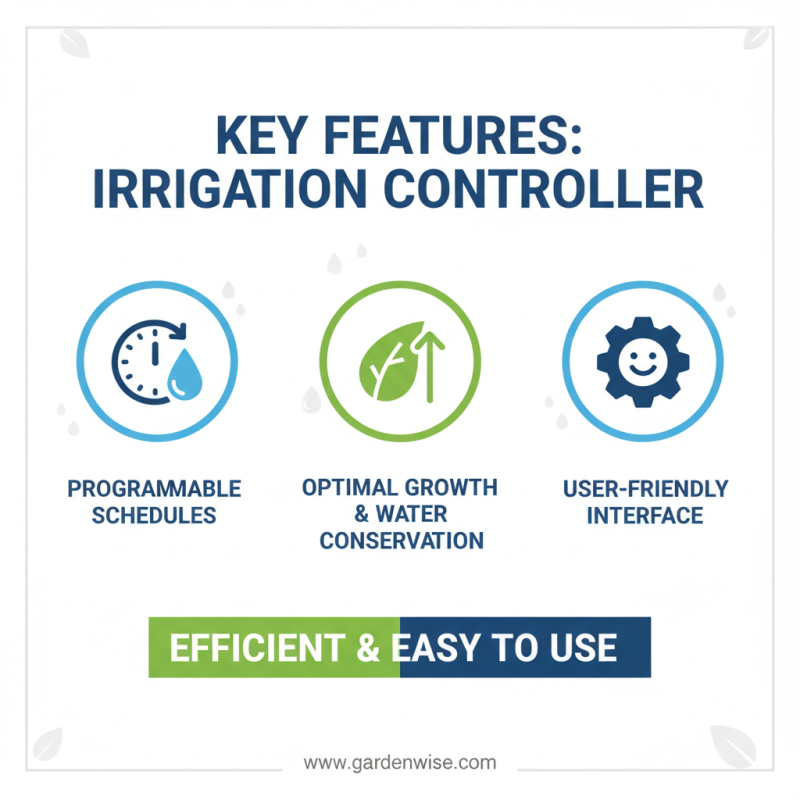
When selecting an irrigation controller for your garden, consider key features that enhance efficiency and ease of use. Look for programmable schedules that allow you to set watering times based on your garden's specific needs. This feature helps in conserving water and ensuring optimal growth. Moreover, a user-friendly interface can make adjustments simpler, allowing easy changes to settings.
Advanced controllers may include weather sensors. These sensors adjust watering based on rainfall and humidity levels, preventing overwatering. A reliable controller should also offer multiple zones, giving you control over various areas of your garden. This is particularly useful if you have different plants with varying water requirements.
Think about connectivity options, too. Wi-Fi enabled controllers can be operated from your smartphone. This allows you to monitor and adjust watering while away from home. However, not all Wi-Fi solutions are reliable. Some may struggle with connectivity, leading to potential issues. Always research user experiences to ensure you're making an informed choice. Sometimes, less advanced models may better suit your needs without the complications of technology. Keep these factors in mind to choose confidently.
Evaluating Smart Technology Integrations for Efficient Watering
Choosing the right landscape irrigation controller is essential for every garden enthusiast. Smart technology integrations can significantly enhance watering efficiency. These systems use data to optimize water usage, reducing waste while keeping your plants healthy.
Consider flexibility in programming. Some controllers allow you to adjust schedules based on weather forecasts. Sensors can monitor soil moisture levels too. This integration helps maintain the perfect balance of water in your garden. However, reliance on technology does come with challenges. Occasional errors in data interpretation may occur.
Also, think about user-friendly interfaces. A complicated setup can deter regular use of smart features. Look for designs that promote ease of navigation. While technology can improve efficiency, ensuring that you understand the system is crucial. Testing features before committing helps avoid regrets later. Balancing smart tech with natural instincts is key to successful gardening.
Comparing Cost-Effectiveness and Energy Efficiency in Controllers
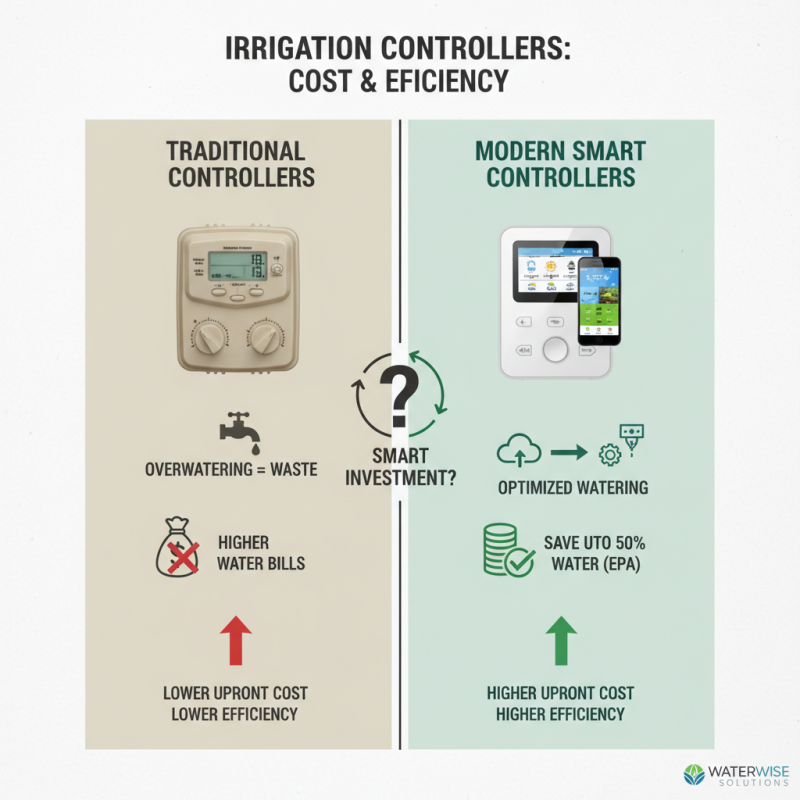
When selecting a landscape irrigation controller, cost-effectiveness and energy efficiency are critical factors to assess. According to the U.S. Environmental Protection Agency, efficient irrigation systems can reduce water waste by up to 50%. Traditional irrigation controllers often lack smart technology, leading to overwatering. In contrast, modern controllers utilize weather data, soil moisture sensors, and advanced algorithms to optimize watering schedules. Users may find that investing in these technologies can cut water bills significantly.
Energy efficiency is another essential aspect. A study by the American Society of Irrigation Consultants indicates that inefficient systems can consume 30% more energy than their efficient counterparts. “Smart controllers” can adjust irrigation based on real-time data, ensuring that energy is not wasted. Research suggests that these systems can provide a return on investment within two years through lower operating costs. However, adoption rates for these advanced systems remain low, possibly due to upfront costs.
Choosing the right controller may require balancing initial investment with long-term savings. Some homeowners may hesitate to switch to more advanced systems due to uncertainty about their reliability. There’s a need for more consumer education on the benefits of energy-efficient irrigation options. Exploring reviews and real user experiences can help mitigate concerns about performance and longevity in the field.
Assessing User Needs and Garden Size to Select the Right Model
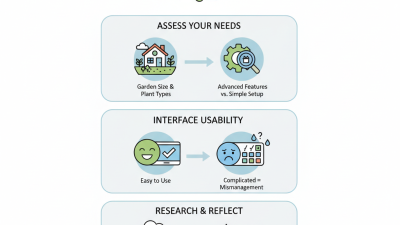
When choosing a landscape irrigation controller, understanding user needs and garden size is crucial. Assessing these factors helps in selecting a model that meets specific requirements. A small herb garden may need a simpler system. In contrast, a larger landscape with various plants requires a more advanced one. Consider your daily routines. Do you travel frequently? If so, an automated system might suit you better.
Next, evaluate the garden’s layout and plant types. Different plants have different water needs. Drip irrigation works well for delicate flowers, while sprinkler systems are ideal for lawns. Take a moment to visualize how water will reach each area. Accessibility is another key factor. A difficult-to-access garden may require a model with wireless controls for convenience.
Some models offer features like weather sensors, which adapt the watering schedule based on rainfall. However, these additional features can be overwhelming. You should ask yourself if you really need them. Reflect on your gardening goals. Will you expand your garden in the future? Choosing a scalable controller can save you from future frustrations. Remember, it's about finding the right balance for your unique garden.
Garden Size vs. Irrigation Controller Capacity