Finding reliable China Top Adjustable Sprinkler Heads Suppliers requires more than comparing prices. Product consistency, water distribution, material quality, and communication often determine long-term performance. A sprinkler head may look simple, yet small nozzle differences can change coverage across an entire lawn, greenhouse, or agricultural field.
This guide examines experienced Chinese manufacturers of Adjustable Sprinkler Heads for residential, commercial, and irrigation projects. It considers manufacturing capability, product customization, quality control, export experience, and after-sales support. Practical details matter. Look for brass, stainless steel, or engineering-grade plastic components, depending on pressure, climate, and installation conditions. Ask suppliers about spray radius, flow rate, operating pressure, and adjustment range. These figures should match tested samples, not only catalog descriptions.
Factory visits, video inspections, and independent sample testing can reveal useful details. Check machining accuracy, thread compatibility, packaging strength, and leak resistance. A supplier with documented inspections and clear technical drawings is usually easier to manage. However, no supplier is perfect. A polished website does not prove stable production. Our initial assumption may also be wrong when a low-cost sample performs well but fails during repeated use.
Reliable sourcing depends on evidence and careful questions. Request batch records, material information, relevant certifications, and installation guidance before placing a large order. The strongest suppliers communicate limitations honestly and explain where their products perform best. That transparency builds trust. This overview helps buyers compare leading Chinese suppliers with practical judgment, realistic expectations, and greater confidence.
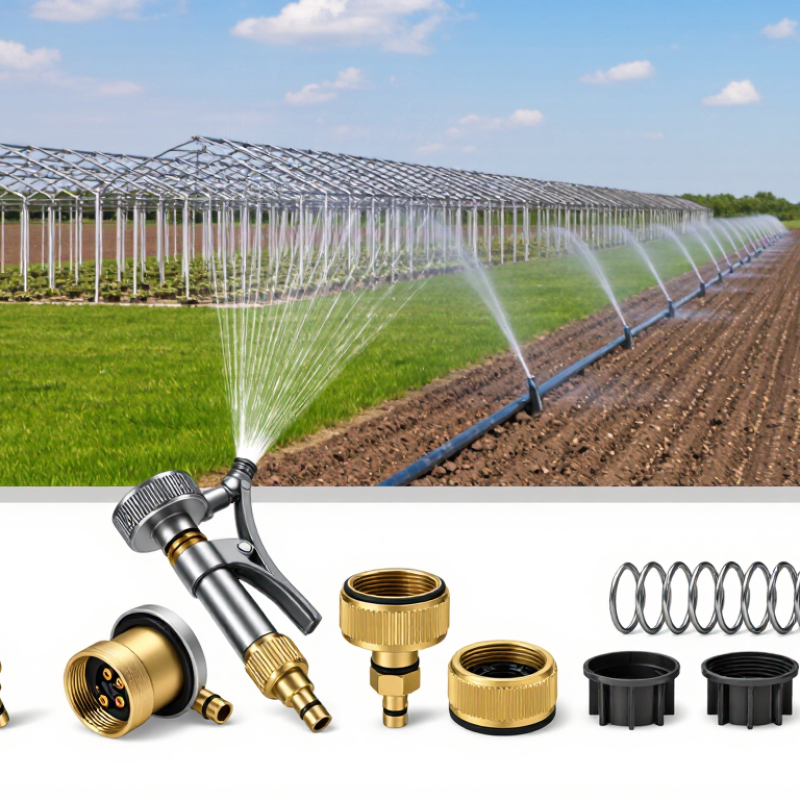
Adjustable sprinkler heads control water delivery through selectable arcs, radii, and flow rates. Common types include fixed spray heads, gear-drive rotors, impact sprinklers, and micro-sprinklers. Spray heads suit narrow lawns and flowerbeds. Rotors cover larger areas with slower, more even movement. Micro-sprinklers work well in nurseries, orchards, and greenhouse benches. Small gardens often need adjustable arc models.
Key features include pressure regulation, interchangeable nozzles, flow adjustment, check valves, and stainless or reinforced polymer components. According to FAO AQUASTAT, agriculture accounts for about 70% of global freshwater withdrawals. That figure makes uniform application more than a convenience. It becomes a design responsibility. The U.S. Environmental Protection Agency reports that WaterSense-labeled irrigation controllers can save an average household nearly 8,800 gallons annually. Heads alone cannot guarantee savings, though. Pressure, spacing, wind, and soil infiltration still decide the result.
Applications vary sharply. A municipal lawn may require matched-precipitation nozzles and short cycles. An orchard may need low-angle micro-sprinklers beneath tree canopies. When evaluating suppliers in China, buyers should request ISO 9261-related testing records, nozzle flow charts, pressure-range data, and salt-spray or ultraviolet-aging results. Field installers often discover a practical weakness: an attractive adjustment ring becomes difficult to turn after dust exposure. Catalog precision is not field precision. Sample testing under local water pressure remains essential.
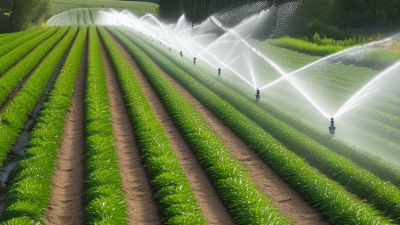
Adjustable sprinkler heads are selected according to required coverage, water pressure, and application area. Spray nozzles are commonly used for small residential zones and planting beds, while impact and gear-driven rotor sprinklers provide wider coverage for lawns, sports fields, and agricultural areas. Micro-sprays are suitable for flower beds, nurseries, and localized landscape irrigation. The ranges shown are representative operating values; actual performance varies with nozzle setting, pressure, spacing, and installation conditions.
China’s adjustable sprinkler head manufacturing landscape combines large production capacity with increasingly precise engineering. Manufacturers serve agricultural, landscape, greenhouse, and residential irrigation projects. Their designs often include rotating nozzles, flow-control rings, and adjustable spray patterns.
Production usually begins with corrosion-resistant polymers, brass, or stainless-steel components. Mold accuracy affects thread fit and spray consistency. Small details matter. Experienced factories test water distribution, pressure tolerance, leakage, and adjustment range before shipment. Many also use sampling plans and batch records to improve traceability. Buyers should request material data, dimensional drawings, and test results instead of relying on catalog images.
The market is competitive, but quality varies between suppliers. Some facilities operate automated molding and assembly lines, while smaller workshops depend heavily on manual inspection. That can create uneven adjustment strength or minor nozzle differences. Testing reveals weaknesses. A reliable supplier should explain its tooling control, inspection frequency, packaging method, and response process for defects. Independent audits can add confidence, especially for large irrigation programs. Still, specifications may change during production, so written approval samples remain important. This step is sometimes skipped, and that is a practical mistake. Clear communication about pressure, coverage diameter, connection size, and operating environment helps manufacturers produce a more suitable sprinkler head.
China’s adjustable sprinkler head suppliers should be assessed through measurable performance, not polished catalogs. FAO AQUASTAT reports that agriculture accounts for about 70% of global freshwater withdrawals. Therefore, flow control and coverage consistency deserve close attention.
Request test data for flow rate, spray radius, pressure range, and adjustment accuracy. Compare results at several pressures, not one ideal setting.
Material selection matters in daily field use. Check nozzle polymers, seals, springs, and corrosion resistance. Ask whether production follows ISO 15886 requirements for agricultural irrigation sprinklers.
Review batch records, incoming material checks, and calibration schedules. A factory should provide sample units for independent testing.
Test them with dirty water, repeated adjustments, and angled installation. Small failures appear there. They often remain hidden in showroom demonstrations.
Supplier reliability also depends on quality systems and delivery discipline. Examine ISO 9001 certification, corrective-action records, inspection photos, and traceability codes.
EPA WaterSense notes that outdoor residential water use can exceed 30% of total household consumption, making uneven coverage an expensive defect. Ask for actual defect rates and warranty data from recent production lots. Be cautious with perfect claims; they may reflect selective testing.
Clear drawings, stable packaging, spare-part availability, and responsive engineering support are practical indicators. Pricing still matters, but the lowest quotation can conceal unstable materials or weak testing.
China’s adjustable sprinkler head suppliers should be compared beyond catalog prices. The 2024 UNESCO World Water Development Report states that agriculture uses about 70% of global freshwater withdrawals. This makes distribution uniformity, pressure stability, and leakage control practical buying priorities. Ask for test records aligned with ISO 15886, including application rate, throw radius, and operating pressure. Small details matter.
Quality often depends on material control. Engineering-grade plastic, corrosion-resistant springs, and consistent nozzle dimensions can improve field life. Customization may include thread sizes, spray patterns, colors, filters, and private packaging. However, customization changes tooling costs and minimum order quantities. A supplier offering every option may not control every process well. That deserves scrutiny.
Pricing should be measured as landed cost, not unit price alone. Compare samples, tooling, inspection, packaging, freight, and replacement rates. Capacity claims also need evidence. Request monthly output, mold numbers, lead times, and recent batch inspection data. China’s National Bureau of Statistics reported continued growth in manufacturing investment during 2024, but factory scale does not automatically prove sprinkler expertise. A smaller producer may deliver tighter customization, while a larger plant may provide steadier capacity. Neither is always better. Trial orders can expose uneven spray, delayed replies, or weak documentation before a major contract.
When selecting China’s adjustable sprinkler head suppliers, begin with the application, not the catalog. Define coverage area, water pressure, flow rate, connection size, and spray angle. A supplier should provide clear performance data at different pressures. Ask for samples before approving a large order. Test adjustment accuracy, leakage, thread fit, and spray uniformity. Small differences can affect an entire irrigation zone.
Reliable suppliers explain material choices, such as corrosion-resistant plastics, brass, or stainless steel. Request production photos, quality-control procedures, and batch traceability records. Independent test reports can support claims about pressure resistance and durability. Confirm compliance with the destination market’s safety and water-use requirements. Do not accept vague certificates. Check issuing bodies and document dates.
Communication also reveals operational reliability. Ask about minimum order quantities, tooling charges, packaging, replacement parts, and lead times. A written specification should list tolerances and inspection standards. Consider a pre-shipment inspection for the first order. It may cost more, but hidden defects cost more later. One common mistake is trusting a polished sample without checking mass production. Request samples from the actual production line when possible. Perfect answers are not guaranteed, so record every assumption and challenge unclear details. Short feedback cycles matter. A dependable supplier welcomes technical questions and reports problems before shipment.
| Evaluation Dimension | Recommended Requirement or Reference Data | Why It Matters | Documents or Tests to Request |
|---|---|---|---|
| Sprinkler Type | Choose adjustable rotary, gear-drive, impact, or pop-up spray heads according to the landscape layout and irrigation zone. | Different mechanisms provide different coverage patterns, precipitation rates, and maintenance requirements. | Product catalogue, operating video, application recommendations, and sample evaluation. |
| Arc Adjustment | For adjustable rotary heads, a common field-adjustable range is approximately 40° to 360°, depending on the design. Fixed or adjustable spray heads may use sector settings such as 90°, 180°, or 360°. | Correct arc adjustment reduces overspray onto buildings, roads, and non-irrigated areas. | Adjustment instructions, tested arc range, stop-position accuracy, and sample field test. |
| Connection Size | Common connection sizes include 1/2 inch, 3/4 inch, and 1 inch threaded inlets. Confirm whether the thread is NPT, BSP, or another specified standard. | Thread incompatibility can cause leakage, installation delays, or the need for extra adapters. | Dimension drawing, thread specification, go/no-go gauge records, and sample connection check. |
| Operating Pressure | Select a model whose tested operating range matches the irrigation system. Many landscape sprinkler heads operate within roughly 2 to 5 bar, but the exact range must be confirmed for each model. | Pressure that is too low reduces coverage; excessive pressure may cause misting, uneven distribution, or component damage. | Pressure-flow-radius chart, test conditions, pressure-regulation recommendation, and independent performance test if required. |
| Flow Rate and Radius | Compare flow rate and throw radius at the same pressure. Typical residential and commercial landscape models may cover approximately 3 to 15 m, depending on nozzle, pressure, and sprinkler type. | Matching flow and radius across a zone supports more uniform irrigation and easier hydraulic design. | Calibrated flow meter results, radius chart, nozzle configuration, and test report using a stated pressure. |
| Water Distribution | Prefer documented distribution uniformity results and matched precipitation data when several heads operate in the same zone. | Uniform distribution helps prevent dry spots, runoff, and unnecessary water consumption. | Catch-can test results, precipitation-rate data, nozzle chart, and recommended head-to-head spacing. |
| Material Selection | Common materials include UV-stabilized engineering plastics for the body and stainless steel or corrosion-resistant materials for selected internal components. | Material quality affects resistance to sunlight, impact, chemical exposure, cracking, and long-term leakage. | Material declarations, UV-resistance information, salt-spray or aging test data where applicable, and incoming material records. |
| Filtration and Clogging Resistance | Confirm the required upstream filtration level and whether the head includes a removable screen, filter, or debris-resistant flow path. | Blocked nozzles and filters cause uneven irrigation and increase maintenance costs. | Filter mesh specification, cleaning procedure, clogging test, and recommended irrigation-water quality. |
| Leakage and Sealing | Require leak testing at the stated maximum working pressure and verify seals, riser connections, and adjustment components. | Reliable sealing prevents water loss, soil erosion, and damage around underground connections. | Leak-test procedure, acceptance criteria, seal material information, and batch inspection records. |
| Freeze and Drainage Protection | For cold climates, verify low-drainage design, proper winterization instructions, and compatibility with system blowout procedures. | Water trapped in the body or connected pipework can expand during freezing and cause cracking. | Cold-weather operating guidance, drainage design details, and temperature-cycle test information. |
| Quality Management | Give preference to suppliers with a documented quality-management system, traceable production batches, and defined inspection procedures. | Process control improves consistency between samples and mass-production shipments. | Quality certificate, process flow chart, inspection plan, calibration records, and sample-to-batch traceability. |
| Compliance and Market Access | Confirm the standards and regulatory documents required in the destination market. Do not treat a general certificate as proof of compliance for every sprinkler model. | Correct documentation supports customs clearance, project approval, and customer acceptance. | Declaration of conformity, applicable test reports, product labels, safety documents, and destination-market requirements. |
| Sample and Pre-Shipment Inspection | Purchase production-representative samples and approve a written specification before placing a bulk order. | A clear approval standard reduces disputes involving dimensions, color, packaging, performance, and accessories. | Golden sample, approved drawings, inspection checklist, third-party inspection option, and corrective-action procedure. |
| Packaging and Shipping | Use protective inner packaging, moisture-resistant cartons where necessary, clear carton markings, and pallet specifications suitable for international transport. | Proper packaging reduces deformation, missing parts, moisture damage, and warehouse handling problems. | Packing list, carton dimensions, gross and net weight, drop-test requirements, photographs, and shipping terms. |
| Commercial Terms | Compare minimum order quantity, sample cost, production lead time, payment terms, warranty period, spare-part policy, and total landed cost. | The lowest unit price may not provide the lowest total cost after tooling, freight, inspection, defects, and replacements. | Formal quotation, proforma invoice, warranty terms, lead-time commitment, tooling ownership terms, and landed-cost calculation. |
| After-Sales Support | Select a supplier that can provide installation guidance, troubleshooting support, replacement components, and prompt responses in English. | Technical support reduces downtime and helps installers achieve the specified irrigation performance. | User manual, exploded-parts diagram, response-time commitment, warranty claim process, and reference projects without undisclosed brand data. |